How much do dental implants cost in Marina del Rey? A pricing guide
In Marina del Rey and West LA, a single implant with its crown typically runs $3,500 to $7,000 per tooth and a fixed full arch $20,000 to $35,000 per arch, with five line items explaining most of the gap between quotes.
Prices in this guide are regional estimates for context, not quotes from Marina Dentistry. Your written plan from the office is the only price that applies to you.
A single dental implant with its crown typically runs $3,500 to $7,000 per tooth in Marina del Rey and the rest of West LA, and a full arch of fixed implant teeth typically runs $20,000 to $35,000 per arch. Those figures are regional estimates for context, not quotes from any one office. The only price that applies to you is the written plan you receive after an exam, because the five line items that move a quote up or down can only be set once your dentist has seen the tooth and the bone around it.
This guide explains what a written implant plan itemizes, why two quotes for the same tooth can differ by $2,000 or more, how to compare them line by line, and what insurance and financing usually do. It is written for patients in Marina del Rey, Venice, Playa Vista, Santa Monica and the rest of the Westside, where fees run high but the logic of a quote is the same.
What a written implant plan itemizes
A written plan lists each procedure by name, usually with its dental code, and puts a fee next to each one. For a single missing tooth, a complete plan typically has these parts:
- Consultation and exam. The visit where your dentist looks at the tooth, the gums and your bite.
- Imaging. X-rays, and a 3D scan when the case needs one.
- Extraction. Removing the failing tooth, if it is still in place.
- Bone graft or sinus lift. Rebuilding bone when there is not enough to hold an implant.
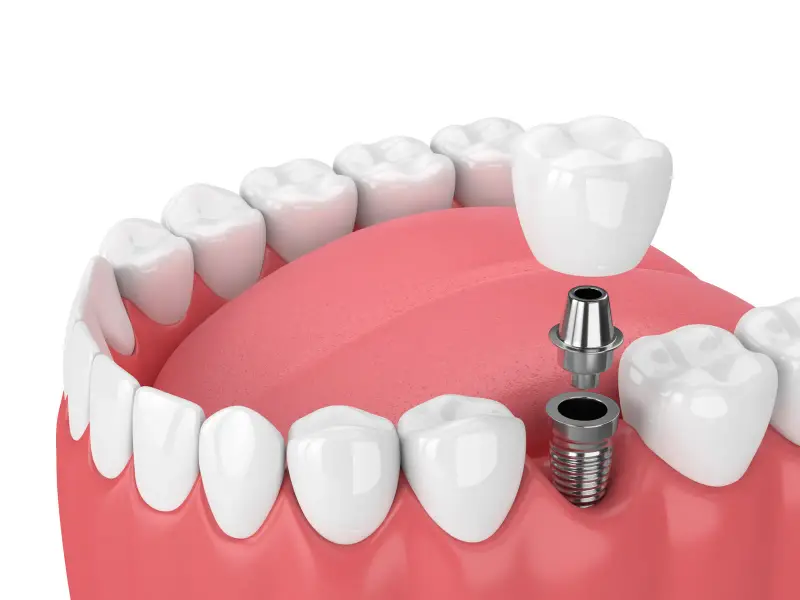
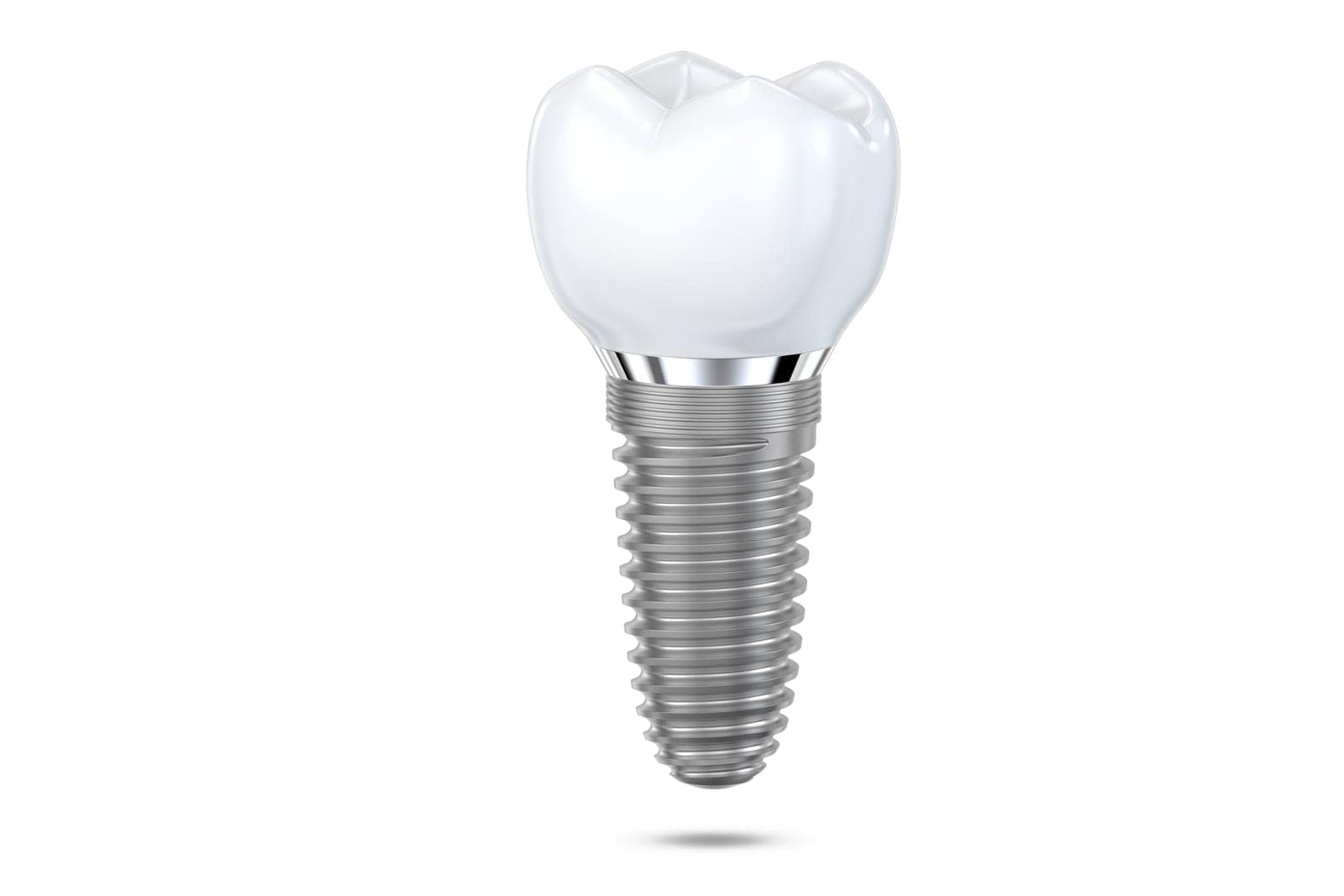
- The implant. The post placed in the jaw, which acts as the root.
- The abutment. The small connector that joins the crown to the implant.
- The crown. The tooth you see and chew with.
- Follow-up visits. Checks during healing and after the crown is fitted.
- Sedation. If you choose it for the surgical visit.
Some offices fold several of these into one fee. Others list every step separately. Neither is wrong, but it is why two quotes rarely line up at first glance. What matters is that every step appears on the page with a number next to it. If a step is missing, ask whether it is included, not needed, or simply not written down yet.
The five line items that make two quotes different
The implant post itself is often priced within a fairly narrow band from one office to the next. Most of the gap between a low quote and a high quote lives in these five places.
1. 3D imaging
A standard X-ray shows the tooth and bone in two dimensions. A 3D scan shows the width and height of the bone, the nerve in the lower jaw and the floor of the sinus in the upper jaw. Many implant cases are planned with one; some straightforward cases are not. Some offices include the scan in the implant fee, some bill it separately, and some do not take one. You should know which of the three your quote is.
2. Extraction
If the tooth is still in your mouth, it has to come out before or at the same time as implant placement. A simple extraction costs less than a surgical one, where the tooth is sectioned or bone is removed to free it. Either way, the extraction is its own line, and a quote for a tooth that is already gone will be lower than one for a tooth that is not.
3. Bone graft or sinus lift
After a tooth is lost, the bone that held it begins to shrink, and a tooth missing for years often leaves less bone than an implant needs. A graft rebuilds the ridge; a sinus lift adds bone beneath the sinus so an upper back implant has something to hold. Both add cost and healing time, and both are described on our bone grafting and sinus lifts page. A quote given before imaging cannot know whether you need one, which is why a phone estimate and a written plan so often disagree.
4. The abutment
The abutment is the connector between the implant and the crown. Most patients have never heard of it, which makes it easy to leave out of an advertised price. Some offices build it into the crown fee, some list it on its own, and some leave it out until later. When you compare plans, find the abutment on each one.
5. The crown
The crown is the visible tooth, and it is usually the largest single line after the implant itself. The material, the lab that makes it and whether a temporary crown is placed during healing all move the figure. An implant quote without a crown is a quote for a post in your jaw, not for a tooth, and should only be compared with other quotes for a post.
Regional ranges, stated as estimates
Prices in this section are regional estimates for context, not quotes from Marina Dentistry. Your written plan from the office is the only price that applies to you.
- A single implant with abutment and crown: roughly $3,500 to $7,000 per tooth in West LA. Extraction, grafting and sedation add to this when needed. Our dental implants page explains who is a candidate.
- A fixed full arch of implant teeth, often called All-on-4 or All-on-X: roughly $20,000 to $35,000 per arch. Our All-on-X full-arch implants page covers how the arch is planned.
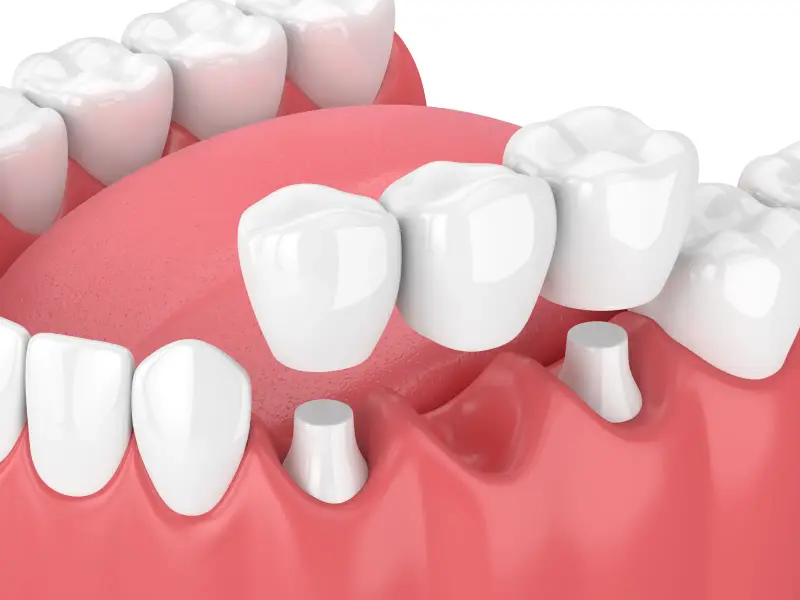
- A conventional bridge: roughly $2,500 to $5,000 per unit. A bridge replacing one tooth usually has three units, two crowns on the neighboring teeth plus the false tooth between them, so the total often lands close to a single implant. Our comparison of implants and bridges weighs the two over the long term.
- An implant-supported overdenture, a denture that snaps onto a few implants: less than a fixed arch, because it uses fewer implants and a removable denture. Our guide to snap-in dentures versus fixed full-arch implants explains the trade-offs, and our implant-supported dentures page covers the treatment.
The ranges are wide because the five line items vary from patient to patient. They apply across the Westside; patients from Venice, Santa Monica, Playa Vista and Playa del Rey see similar figures, and the written plan, not the zip code, sets the final number.
How to compare two implant plans line by line
Two plans for the same tooth can look very different and still describe the same treatment. Here is how to put them side by side.
- Match each line. Write the steps from the first section down one side of a page and fill in the fee from each plan. Blank spaces tell you more than totals do.
- Find the crown and the abutment on both. If one plan has them and the other does not, the second is not a quote for a finished tooth yet.
- Check imaging. Is a 3D scan included, billed separately, or not planned?
- Look at extraction and grafting. If one plan includes a graft and the other does not, ask why. Sometimes it is a difference in clinical judgment; sometimes one dentist has seen imaging and the other has not.
- Ask about follow-up. How many visits are included during healing, and what happens if the crown needs adjusting later?
- Compare the bottom line, not the headline. A lower total that includes everything is a lower total. A lower headline that leaves out the crown is not.
If one quote came from a phone call or a website rather than an exam, treat it as a starting point. Nobody can price a graft they have not yet seen the need for.
What insurance usually does
Dental insurance treats the parts of an implant differently. Many PPO plans pay a share of the crown as major restorative work after the deductible. Coverage for the implant post varies more: some plans pay their major-tier share, some exclude it, and some pay only what a bridge would have cost under an alternative benefit clause. Extractions are often covered; grafting sometimes is. And because annual maximums are often lower than the cost of a single implant, even a generous plan may leave a good share to you.
The only reliable answer is a pre-treatment estimate, which the office sends to your insurer with the proposed codes and X-rays before any work begins. Marina Dentistry accepts all PPO plans and several HMO plans, including Delta Dental and Anthem; confirm your plan with the office. Our guide to whether dental insurance covers implants, Invisalign or veneers explains how to read your plan and how to time treatment across two plan years. Whatever the plan leaves to you can often be paid with a health savings account or flexible spending account, since Internal Revenue Service rules treat implants as a qualified medical expense.
Paying for the balance
For the part insurance does not cover, Marina Dentistry works with Cherry, CareCredit and Sunbit, which offer payment plans to approved patients; approval and terms depend on the lender. Patients without insurance can ask whether the membership plan, published at $199, $299 or $399 per year, applies to any part of their care; it is not dental insurance. Details are on our financing and insurance page.
The published $699 implant offer
Marina Dentistry publishes a new-patient implant offer on its specials page: implant placement for $699, with the exam and X-rays included. The abutment and crown are quoted separately in your written plan, and so is sedation. The offer is for new patients and cannot be combined with insurance benefits or other offers. Call (310) 578-5000 to confirm the current terms before your visit.
In the language of this guide, the offer covers three lines: the exam, the imaging and the implant post. The abutment and crown are still on your plan at their regular fees, and so are an extraction or a graft if your case needs them. That is how any advertised implant price should be read: find out which lines it covers, add the rest from the written plan, and compare totals.
Timeline from consultation to final crown
An implant is finished in stages, and the calendar matters as much as the fee when you plan around work or travel.
- Consultation. One visit for the exam, imaging and the written plan.
- Extraction and grafting, if needed. Sometimes done the same day as placement; sometimes the site heals for a few months first.
- Implant placement. Usually a single appointment.
- Healing. Bone grows onto the implant over the following months, often three to six, depending on the jaw and whether a graft was placed.
- Abutment and impression. Once the implant is stable, the abutment is fitted and the crown is made to match your neighboring teeth.
- Final crown. The crown is attached and the bite is checked.
Start to finish, a straightforward single implant often takes four to eight months; a case with extraction and grafting can take closer to a year.
What a consultation at Marina Dentistry includes
An implant consultation here is unhurried. Your dentist examines the tooth or the space, the gums and your bite, and takes the imaging the case needs, which may include a 3D scan. You talk through the options that fit your mouth, and you leave with a written plan that lists every step with its fee. For any major work the office sends a pre-treatment estimate to your insurer before anything is scheduled. The team led by Dr. Sameer Aljanedi, DDS, places and restores implants in the same office, so the plan comes from one place.
The office is at 4292 Lincoln Blvd in Marina del Rey, open six days a week including Saturday from 8 AM to 4 PM. You can book online or read what to expect as a new patient.
This article is general information from Marina Dentistry and not a diagnosis. Only an exam can tell you what is right for your mouth. Request an appointment or call (310) 578-5000.