Implants

Dental implants in Marina del Rey

A dental implant is a small titanium post placed in the jawbone to replace the root of a missing tooth. Once it heals, a crown, bridge or denture attaches to it. Implants suit most healthy adults missing one or more teeth who want a fixed replacement that looks, feels and functions much like a natural tooth.

At Marina Dentistry the consultation ends with the imaging your case needs and a written plan with a price, before anything is scheduled.

Open six days a week, including Saturday
All PPO plans and several HMO plans accepted
Written estimate before any treatment
Led by Dr. Sameer Aljanedi, DDS

New patient offers

Two published offers for this treatment

The same offers as on the specials page, with the fine print on each card. Claim one when you request your visit; we confirm the terms with you before anything is booked.

All new patient specials
Consultation

Free consultation

Complimentary

A consultation with your dentist including full-mouth X-rays and an examination, so you leave with a clear picture and a written plan.

Consultation and X-rays only. New patients. Cannot be combined with insurance benefits or other offers.
On this page
  1. Overview
  2. Who it is for
  3. What to expect
  4. Candidacy and alternatives
  5. How it compares
  6. Technology
  7. Aftercare
  8. Cost and financing
  9. FAQ
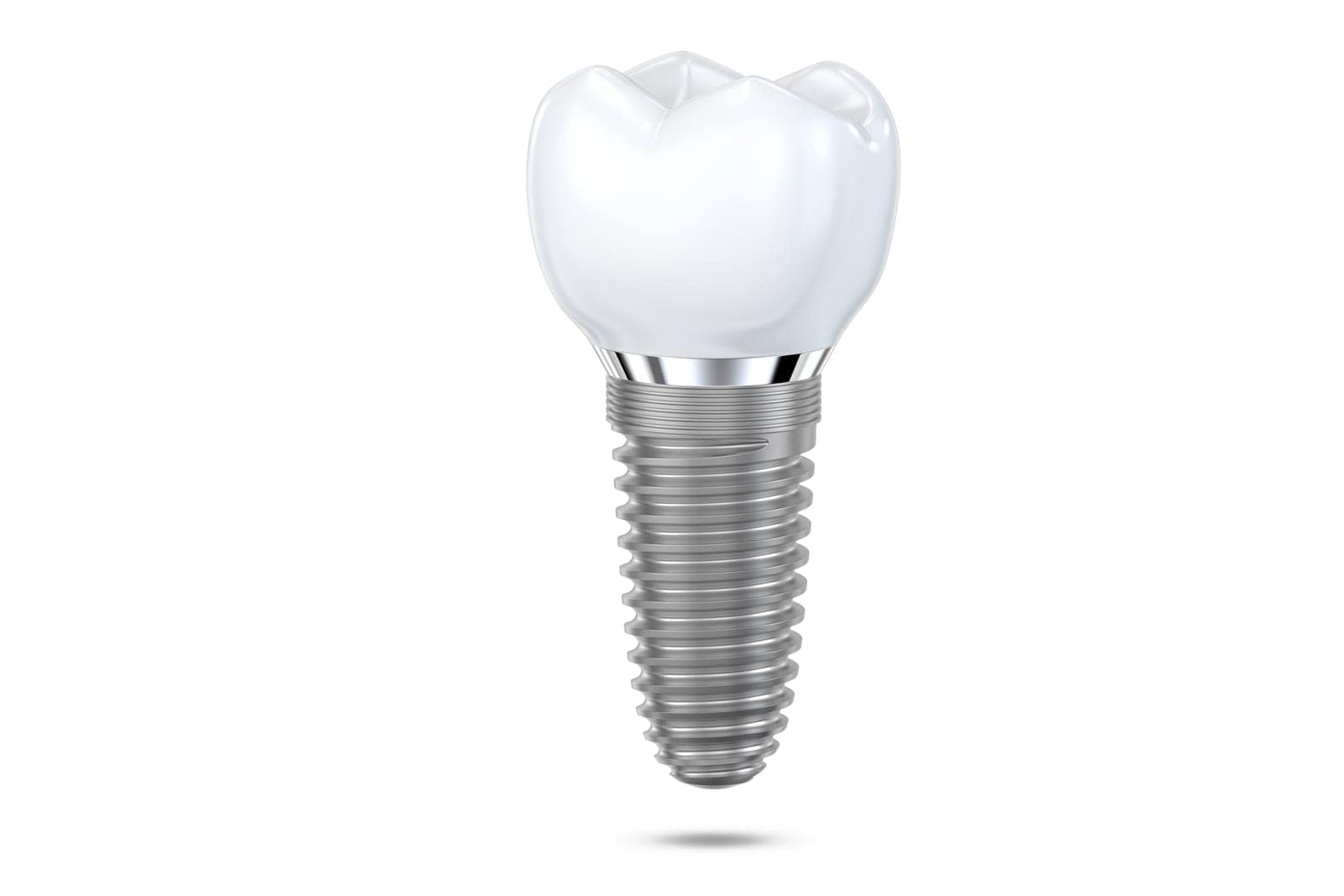
A single dental implant with a white ceramic crown attached, on a plain background

Quick facts

Good for
One missing tooth to a full arch
Visits
Usually four or five over several months
Anesthesia
Local; sedation options available
Downtime
Most people return to normal routines the next day
Lasts
Often decades with daily care and regular checkups

Losing a tooth changes more than your smile. The bone that held the root starts to shrink, neighboring teeth drift, and chewing shifts to one side. A dental implant replaces the root itself.

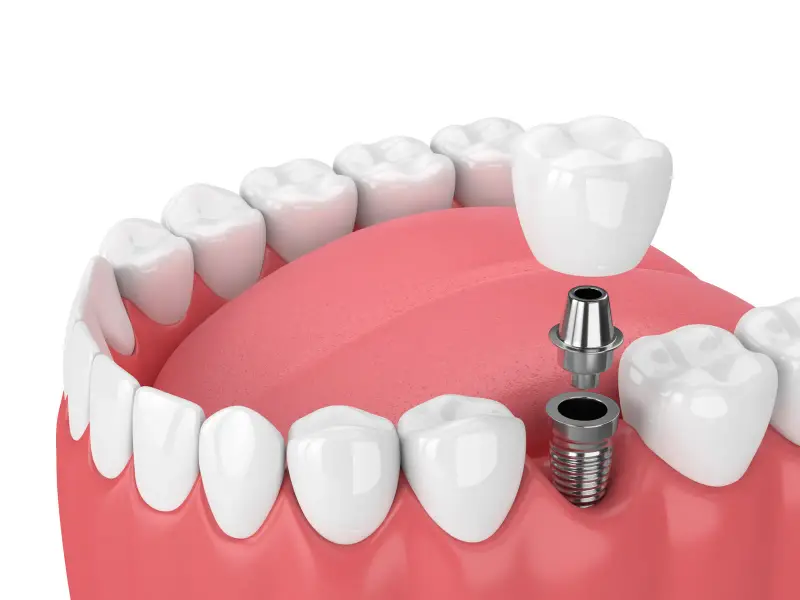
The implant is a small post, usually titanium, placed in the jaw where the root used to be. Over a few months the bone grows tightly around it. Once it is stable, your dentist attaches a connector and a custom crown that matches your other teeth. For several missing teeth, implants can hold a bridge or secure a denture so it stops moving.

Why patients choose implants

An implant does not rely on the teeth next to it, so those teeth stay untouched. It keeps the jawbone active, which helps your face keep its shape. And because it is fixed in place, you brush and floss it much like a natural tooth.

Who this is for

  • You are missing one tooth and do not want the neighbors reshaped for a bridge
  • You are missing several teeth in one area or across the mouth
  • Your lower denture slides when you eat or talk
  • You want a replacement that stays put and feels solid when you chew

If you have lost most or all of your teeth, a full-arch option such as All-on-X may fit better than single implants. We review both paths with you so you can compare before deciding.

What to expect, step by step

  1. Consultation and imaging

    Your dentist examines your mouth, reviews your health history and takes images to measure bone height and width. You leave with a written plan.

  2. Preparation if needed

    A failing tooth may need to come out first, and thin bone may call for a graft. Some people have the implant placed the same visit as the extraction; others heal for a few months first.

  3. Implant placement

    The post is placed in the jaw under local anesthesia, with sedation if you are anxious. Most patients return to normal routines the next day.

  4. Healing

    Over roughly three to six months the bone fuses to the implant. A temporary tooth can fill the gap if it shows when you smile.

  5. Final restoration

    Once the implant is solid, a connector is attached and your custom crown, bridge or denture attachment is fitted. Your bite is checked and you learn how to clean around it.

Are you a candidate?

Most healthy adults with a fully grown jaw are candidates. Bone volume, gum health and overall health matter most. Uncontrolled diabetes, heavy smoking, certain medications and radiation to the jaw can slow healing and raise the risk of an implant not integrating. You may be asked to work with your physician, treat gum disease first, or add bone grafting to build support.

Alternatives worth discussing

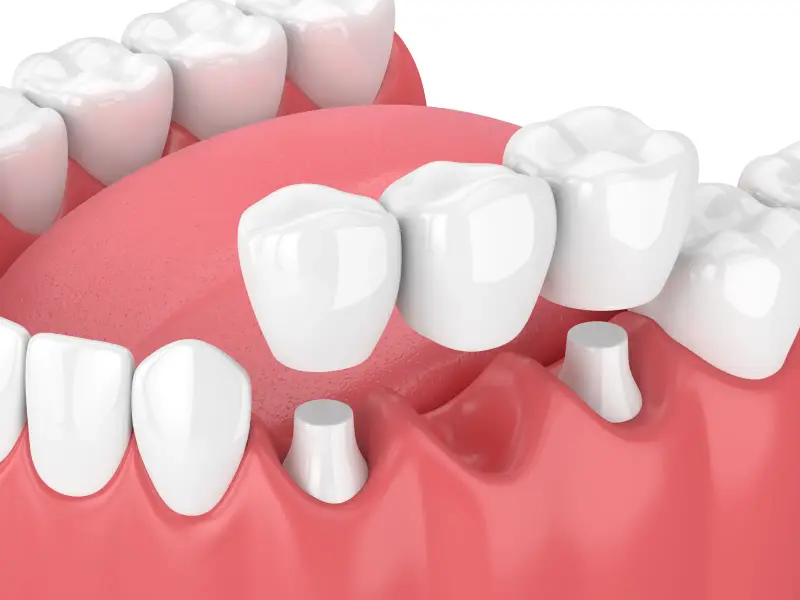
  • Dental bridge. A fixed bridge uses the teeth on either side of the gap to hold a replacement tooth. It is faster and avoids surgery, but those neighboring teeth are reshaped for crowns, and bone under the gap keeps shrinking.
  • Removable partial denture. A partial clips to remaining teeth and comes out at night. It costs less up front and needs no surgery, but it can move while eating and may feel bulky.

Implant, bridge or denture: how they compare

Three common ways to replace a missing tooth. Which one fits depends on your bone, your gums, the teeth next to the gap and what you want day to day. This is the conversation your dentist has with you at the consultation.

Implant, bridge or denture: how they compare
Dental implantThis pageFixed bridgeRemovable denture
How it stays inA post in the jawbone holds the new toothCrowns on the teeth either side hold itRests on the gums, clipped to teeth if any remain
Teeth next to the gapLeft aloneReshaped to hold crownsUsually left alone; clasps may rest on them
SurgeryYes, a minor procedure under local anestheticNoNo, unless teeth need to come out first
Bone under the gapHelps keep the bone where the post sitsBone under the gap keeps shrinking slowlyBone keeps shrinking; the fit changes over time
Typical timelineSeveral months, mostly healing timeUsually a few weeksUsually a few weeks
Day to dayBrushed and flossed like a natural toothCleaned under with a floss threader or water flosserTaken out to clean and usually at night
Up-front costHighest of the threeIn betweenLowest of the three

Insurance often covers part of a bridge or denture and sometimes part of an implant. You get a written estimate before anything starts.

Technology and materials

Planning is what makes implants predictable. Imaging that shows bone in three dimensions may be used to place the post safely away from nerves and sinuses.

Recovery and aftercare

The first few days are about letting the site rest. Mild soreness and some swelling are normal and usually respond to over-the-counter pain relievers. Stick to soft foods, avoid straws and smoking and keep the area clean with gentle rinsing.

  • Brush twice a day and clean between the implant and neighboring teeth daily
  • Keep your regular cleanings and exams so the gum around the implant stays healthy
  • Wear a night guard if you grind your teeth
  • Call the office if you notice looseness, swelling or bleeding around the implant

Cost and financing

The cost of an implant depends on how many teeth are replaced, whether grafting or an extraction is needed and the type of final restoration. You receive a written estimate and an insurance check after your consultation. We accept all PPO plans and a range of HMO plans; confirm your plan with the office. Payment plans through Cherry, CareCredit and Sunbit are available, subject to credit approval, and our membership plan offers savings for patients without insurance. See financing and insurance.

What changes the cost

  • Number of teeth replaced
  • Whether bone grafting or a sinus lift is needed
  • Whether a tooth must be removed first
  • Type of final restoration
  • Insurance coverage

FAQ

Questions about dental implants

How much do dental implants cost?

Implant cost varies with how many teeth you replace, whether you need grafting or an extraction and the type of crown or bridge on top. We do not quote a price online because every plan is different. After your exam you receive a written estimate, an insurance check and payment plan options through Cherry, CareCredit and Sunbit.

Does getting a dental implant hurt?

Implant placement is done under local anesthesia, so you should feel pressure but not sharp pain during the procedure. Afterward, most patients describe soreness similar to a tooth extraction that eases within a few days with over-the-counter medication. If dental visits make you anxious, ask about sedation options when you book.

How long does the implant process take from start to finish?

Plan on three to six months for a straightforward single implant, and longer if you need an extraction or bone graft first. The timeline is set by healing, not by appointments. You typically have four or five visits: consultation, placement, a check, impressions and fitting the final crown.

How long do dental implants last?

The implant post itself can last for decades when the bone and gum around it stay healthy. The crown on top wears like any dental work and may need replacement after ten to fifteen years or so. Daily cleaning, regular checkups and not smoking are the biggest factors in how long yours lasts.

Am I too old for dental implants?

Age alone is rarely the issue. Healthy adults in their seventies and eighties get implants routinely. What matters is bone volume, gum health and medical conditions that affect healing. Your dentist reviews your health history and may coordinate with your physician before recommending implants, grafting or a different option such as a well-fitted denture.

Is there an implant dentist near Venice or Playa Vista with Saturday hours?

Marina Dentistry is at 4292 Lincoln Blvd in Marina del Rey, a short drive from Venice, Playa Vista, Playa del Rey and Santa Monica. We are open six days a week including Saturday, which helps when implant appointments need to fit around work. Call (310) 578-5000 or book online.

Ready to take the next step?

Request a time online and we will confirm by phone or text during office hours. Same-day visits for dental emergencies.