The first two weeks after dental implant surgery
What usually happens in the first two weeks after implant surgery: swelling, bleeding, what to eat, how to keep the area clean, why smoking matters, and the warning signs that are worth a call.
Most people feel close to normal within a week or two of dental implant surgery, with soreness and swelling that usually peak in the first two or three days and then ease. The implant itself keeps healing into the bone for months after that, so the first two weeks are about protecting the area, eating soft foods and watching for the few signs that mean you should call.
This guide walks through what each stage usually looks like, in general terms. Every surgery is a little different. A single implant in healed bone is often an easier recovery than several implants, an implant placed the same day a tooth was removed, or one combined with a bone graft or sinus lift. The written instructions your dentist gives you come first. If anything here differs from what you were told, follow your own instructions, and call the office if you are unsure.
Before you go home: what to have ready
A little preparation makes the first few days easier.
- Soft foods in the fridge: yogurt, applesauce, eggs, soup, mashed potatoes, oatmeal, smoothies to eat with a spoon
- Ice packs or bags of frozen peas
- Gauze, if the office has not sent you home with enough
- Extra pillows so you can sleep with your head raised
- Your prescriptions filled before surgery day, if your dentist has prescribed anything
- A ride home, if you are having any form of sedation. Our post on dental sedation options explains what each type means for the rest of your day.
Day of surgery
You usually leave the office numb, with gauze over the site.
Bleeding. Some oozing is normal for the first day, and saliva may look pink for a while longer. Bite gently but steadily on the gauze for as long as your dentist tells you, and change it when it is soaked. If bleeding is steady rather than oozing, a damp black tea bag held with gentle pressure can help a clot form. Heavy bleeding that continues despite pressure is a reason to call.
Numbness. Local anesthetic can take several hours to wear off. Avoid hot drinks and chewing until you can feel your lips, cheek and tongue again, so you do not bite or burn them.
Ice. Cold packs on the outside of the face, on and off, help limit swelling in the first day. Your instructions will say how long to apply them.
Rest. Plan a quiet day with your head raised. Skip exercise and heavy lifting, which raise blood pressure and can restart bleeding.
Food. Once the numbness fades, stick to cool and lukewarm soft foods, and chew on the other side of your mouth. Drink plenty of water from a cup.
What not to do. No straws, no forceful spitting, no rinsing hard and no smoking or vaping. Suction and pressure can disturb the blood clot at the surgical site, which is the start of healing.
Medication. Take pain relievers and any antibiotics exactly as your dentist directs, and do not add other medications without asking.
Days 1 to 3: swelling peaks
Many people feel fine on the evening of surgery and are surprised when the next morning is more swollen. That is normal. Swelling usually reaches its peak around the second or third day, and some people get bruising on the cheek or jaw that drifts lower over the following days.
Warmth after the first day or two. Many dentists switch patients from ice to warm, moist compresses after the first day or two, which helps swelling drain. Follow your own instructions on timing.
Rinsing. Starting the day after surgery, many dentists recommend gentle warm salt water rinses after meals and before bed, or a prescription rinse. Let the liquid fall out of your mouth rather than spitting.
Brushing. Keep brushing your other teeth normally, twice a day. Stay away from the surgical site with the brush until your dentist says otherwise. Plaque building up elsewhere in the mouth does not help healing.
Sleep. Keep your head raised on an extra pillow or two. A little pink on the pillowcase in the first night or two is common.
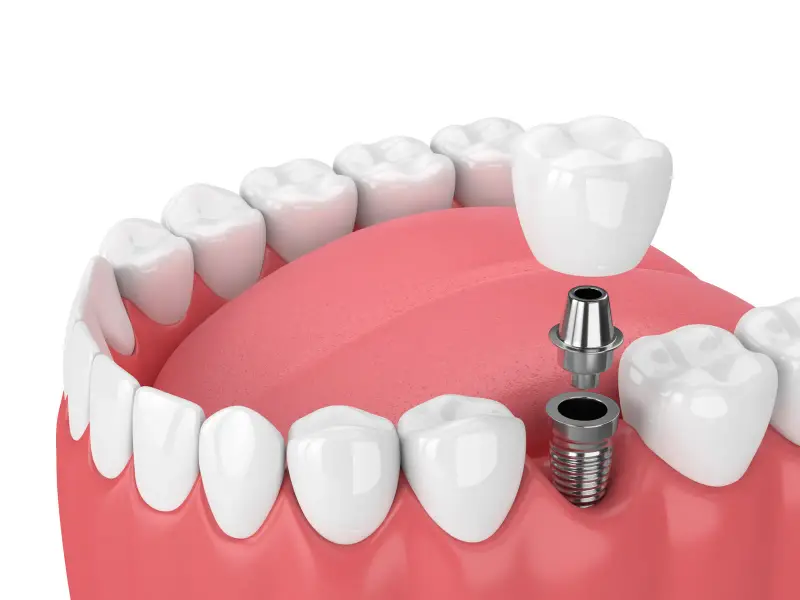
What you may see. Depending on how your implant was placed, you may see a small metal healing cap at the gumline, or only stitches over gum that has been closed. Both are normal.
Days 4 to 7: turning the corner
By the end of the first week, most people are clearly improving. Swelling goes down, soreness eases and most need less pain medication. Cleveland Clinic's page on dental implants notes that the first round of healing takes about one week.
Food. You can usually move to soft foods that take a little more chewing: pasta, soft fish, rice, well-cooked vegetables, soft bread. Keep chewing on the other side. Avoid hard, crunchy and sticky foods, and small seeds and grains that can lodge around the site.
Stitches. Dissolving stitches often start to loosen or fall out around this time. That is expected. If non-dissolving stitches were used, your dentist will tell you when they come out.
Activity. Many people go back to desk work within a few days. Wait for your dentist's go-ahead before strenuous exercise.
If you had a sinus lift. Your dentist may ask you to avoid blowing your nose, to sneeze with your mouth open, and to avoid anything that changes pressure in the sinus, such as flying or swimming underwater, for a period after surgery. Our page on bone grafting and sinus lifts explains why. Small, sand-like graft granules in your mouth for a few days can be normal after a graft; a steady stream of them is worth a call.
Week two: the follow-up visit
Most people feel close to normal in the second week and are eating a wide range of soft and medium foods again. Many offices schedule a follow-up visit somewhere in the first couple of weeks to check the gum, remove stitches if needed and answer questions.
The gum heals faster than the bone. Even when the area feels fine, the implant is still knitting into the jaw. Cleveland Clinic notes that it takes anywhere from three to nine months for the jawbone to fuse around an implant. That is why your dentist may ask you to keep chewing away from the site for a while, and why the final crown comes later.
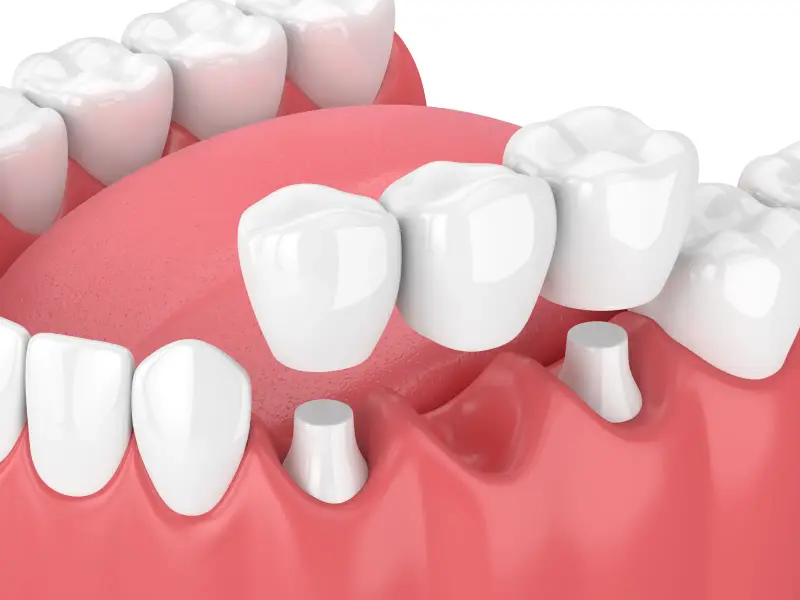
If you have a temporary tooth or a removable replacement over the area, wear it exactly as instructed. Pressure from a temporary that rests on the healing gum can disturb the implant, so tell the office if it rubs or feels like it is pressing down.
Cleaning. Around this time, your dentist will usually tell you when to start brushing gently near the healing cap with a soft brush. Keeping it clean matters, because the gum around an implant can become inflamed just like the gum around a natural tooth.
Smoking, vaping and healing
Healing bone needs good blood flow, and nicotine narrows blood vessels. Cleveland Clinic notes that smoking or vaping can disrupt the healing process around implants. If you smoke or vape, your dentist will usually ask you to stop for a period before and after surgery. Even a pause helps, and the first days and weeks matter most. Our post on how smoking and vaping affect your gums has free resources if you would like help quitting.
Warning signs: when to call
Most recoveries are uneventful. Call the office if you notice:
- Bleeding that stays heavy despite firm pressure on gauze for the time your dentist suggested
- Swelling that keeps getting worse after the third day
- Pain that increases after the third day instead of easing, or that pain medication no longer controls
- Fever, chills, pus, or a bad taste or smell that does not clear with gentle rinsing
- Numbness in the lip, chin or tongue that lasts well after the anesthetic should have worn off
- A healing cap, implant or temporary that feels loose or moves
- A rash, hives, stomach upset or other reaction to a medication
Swelling that affects your breathing or swallowing is an emergency room visit, not a phone call. For other urgent problems during office hours, our emergency dentist page explains how we help.
Implant care at Marina Dentistry
An implant consultation at Marina Dentistry starts with an exam and the X-rays needed to see the bone and nearby structures, then a plain explanation of whether an implant suits you, whether a graft is needed, and what the steps and timeline look like. You get a written plan with pricing before any treatment starts, along with written aftercare instructions to read before surgery day. Our dental implants page explains the process from start to finish. We accept all PPO plans and a range of HMO plans, including Delta Dental and Anthem; confirm your plan with the office. We are at 4292 Lincoln Blvd in Marina del Rey and open six days a week, including Saturday from 8 AM to 4 PM. Call (310) 578-5000 or book online.
This article is general information from Marina Dentistry and not a diagnosis. Only an exam can tell you what is right for your mouth. Request an appointment or call (310) 578-5000.