Restorative

Root canal treatment in Marina del Rey

A root canal removes infected or inflamed pulp from inside a tooth, cleans and seals the root canals and saves the tooth from extraction. It is for teeth with deep decay, cracks or trauma that cause lingering pain, sensitivity to heat or an abscess. Most are done in one or two visits under local anesthetic, followed by a crown.

At Marina Dentistry every visit ends with a written plan and a price before anything else is scheduled.

Open six days a week, including Saturday
All PPO plans and several HMO plans accepted
Written estimate before any treatment
Led by Dr. Sameer Aljanedi, DDS

New patient offer

A published offer for this treatment

The same offer as on the specials page, with the fine print on the card. Claim it when you request your visit; we confirm the terms with you before anything is booked.

All new patient specials
On this page
  1. Overview
  2. Who it is for
  3. What to expect
  4. Candidacy and alternatives
  5. Technology
  6. Aftercare
  7. Cost and financing
  8. FAQ
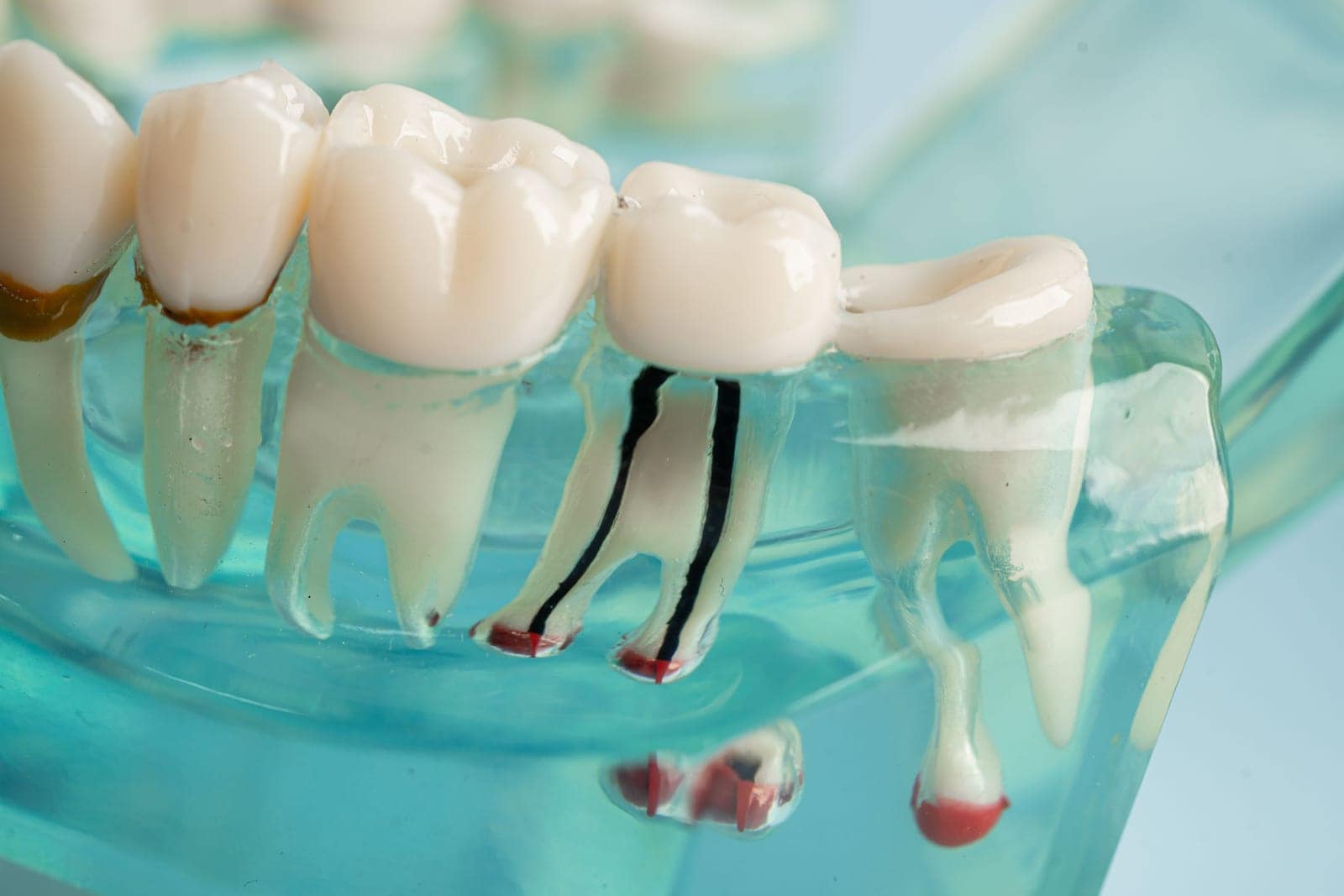
A clear teaching model showing the canals inside tooth roots

Quick facts

Good for
Teeth with infected or inflamed pulp that are otherwise worth saving
Visits
Usually one or two, plus a crown appointment
Anesthesia
Local; most people compare it to getting a filling
Time
About 60 to 90 minutes per visit
Afterward
A crown is usually needed on back teeth to prevent cracking

A root canal has a worse reputation than it deserves. The pain people associate with it is the toothache that comes before, when the nerve inside the tooth is inflamed or infected. The treatment is what ends that pain. With modern local anesthetic, most people say it feels like having a filling, just longer.

Inside each tooth is a soft core of nerves and blood vessels called the pulp. Deep decay, a crack, a large old filling or a blow to the tooth can inflame or infect it, and once that happens the pulp cannot heal on its own. The choice becomes removing the pulp and keeping the tooth, or removing the tooth.

At Marina Dentistry in Marina del Rey, the team led by Dr. Sameer Aljanedi, a general dentist, diagnoses the tooth, explains whether a root canal or an extraction makes more sense, and performs most root canals here. Teeth with unusually curved or narrow canals, or cases that need retreatment, may be referred to an endodontist, a dentist with advanced training in root canals.

Signs you might need one

Lingering pain after hot or cold, pain when biting, a tooth that aches at night, a pimple on the gum near a tooth, darkening of a tooth or swelling in the face or jaw. Sometimes there are no symptoms and the infection shows up on an X-ray. Facial swelling with fever is an emergency; call the same day.

Who this is for

  • A toothache that lingers after hot or cold, or wakes you at night
  • Pain or tenderness when you chew on one tooth
  • A pimple-like bump on the gum, or a bad taste from one area
  • A tooth that has darkened after an injury
  • An abscess or infection found on an X-ray, even without pain

The tooth also needs enough healthy structure left to hold a crown. If it does not, extraction and a dental implant may be the better path, and your dentist will walk you through both.

What to expect, step by step

  1. Diagnosis

    An exam, X-ray and simple tests like cold and tapping confirm the pulp is the problem and that the tooth is worth saving.

  2. Numbing

    Local anesthetic numbs the tooth completely. If you are anxious, ask about comfort options such as sedation dentistry.

  3. Access and cleaning

    A small opening is made in the top of the tooth. The inflamed or infected pulp is removed and each canal is cleaned, shaped and disinfected.

  4. Filling and sealing

    The canals are sealed with a rubber-like material and the opening is closed with a temporary or final filling. In some cases medication is placed and a second visit finishes the work.

  5. Crown

    Back teeth and most heavily filled front teeth need a crown within a few weeks to prevent cracking. The crown is what makes the result last.

Are you a candidate?

A tooth is a good candidate when the infection is confined to the pulp and roots, the root is not badly fractured and there is enough sound tooth left above the gum to hold a crown. A vertical root fracture, a canal that cannot be reached or a tooth with little supporting bone from gum disease may not be savable, in which case extraction is more predictable. Very curved canals or previously treated teeth that have become reinfected are often referred to an endodontist. Your medical history, including heart conditions and blood thinners, is reviewed first.

Alternatives worth discussing

  • Extraction and dental implant. When the tooth cannot be saved, an implant replaces the root and crown and does not rely on neighboring teeth. It costs more and takes months.
  • Extraction and bridge. Faster than an implant, but requires crowning the teeth on either side. See dentures and bridges.
  • Waiting. An infected pulp does not heal. Pain may fade when the nerve dies, but the infection continues and can spread to the jaw or face, and the tooth gets harder to save.

Technology and materials

Modern root canal treatment uses good imaging, magnification, flexible instruments that follow curved canals and sealing materials that keep bacteria out. Some cases benefit from 3D imaging to map complex roots before treatment.

Recovery and aftercare

Most people return to work or school the same or next day. The tooth and surrounding gum can be sore for two to four days as the inflammation settles.

  • Avoid chewing on the tooth until the final filling or crown is placed
  • Over-the-counter pain relievers, taken as directed, handle most soreness
  • Schedule your crown appointment promptly; a treated tooth without a crown can crack
  • Call if swelling increases, pain worsens after the first few days or the temporary filling comes out

Cost and financing

The cost of a root canal depends mostly on which tooth it is: front teeth have one canal, molars have three or four and take longer, and the crown afterward is a separate fee. Most PPO plans cover both at a shared percentage. Marina Dentistry accepts PPO plans and a range of HMO plans, including Delta Dental and Anthem; confirm your plan with the office. You receive a written plan with an insurance estimate first. Payment plans through Cherry, CareCredit and Sunbit are available subject to credit approval, and our membership plan discounts treatment for the uninsured. See financing and insurance.

What changes the cost

  • Which tooth: front teeth are simpler than molars
  • Number of canals and their complexity
  • Whether a second visit or retreatment is needed
  • The crown or filling afterward
  • Referral to an endodontist for complex cases

FAQ

Questions about root canals

Does a root canal hurt?

With modern local anesthetic, most people say a root canal feels like getting a filling, just longer. The tooth is fully numbed before work begins. The pain people fear is the toothache before treatment, which the root canal removes. Afterward, expect soreness for a few days that over-the-counter pain relievers usually handle.

How long does a root canal take?

Most root canals take 60 to 90 minutes and are finished in one visit. Molars with several canals, or teeth with active infection, sometimes need two visits so medication can work inside the tooth between appointments. A separate appointment for the crown follows within a few weeks. Plan on two to three visits in total.

Do I need a crown after a root canal?

Usually, yes, especially on back teeth. Removing the pulp and the decay leaves the tooth hollower and more brittle, and chewing forces can crack it. A crown covers and protects it. Some front teeth with little damage can be restored with a filling alone; your dentist will tell you which applies.

Root canal or extraction: which is better?

Keeping your own tooth is usually the better choice when it can be saved, because nothing replaces a natural root as well. Extraction makes sense when the root is fractured, bone support is poor or the tooth is too broken down to hold a crown. Your dentist explains both options, including what replacing the tooth would involve.

How much does a root canal cost?

It depends on which tooth. Front teeth with one canal cost less than molars with three or four. The crown afterward is a separate fee. Most PPO plans cover both at a shared percentage. The office gives you a written estimate before treatment, and payment plans through Cherry, CareCredit and Sunbit are available subject to credit approval.

Will I be referred to an endodontist?

Marina Dentistry is a general practice and performs most root canals in the office. Teeth with very curved or narrow canals, teeth that need a previous root canal redone or cases where the canal cannot be located may be referred to an endodontist, who has advanced training in this treatment. We tell you up front if a referral is likely.

Ready to take the next step?

Request a time online and we will confirm by phone or text during office hours. Same-day visits for dental emergencies.