Implants vs bridges: which replacement lasts longer?
Dental implants typically last 20 years or more, often a lifetime, while bridges last 7 to 15 years because they rely on neighboring teeth and let the bone beneath them shrink. Here is why, and when a bridge still fits.
If you’re missing a tooth, or facing the loss of one, you’re likely comparing your replacement options. Two of the most common solutions are dental implants and dental bridges.
One of the first questions patients ask is:
“Which option lasts longer, dental implants or bridges?”
The honest answer is that both can work well, but they differ significantly in longevity, maintenance, impact on surrounding teeth, and long-term value.
This guide breaks down the real differences between dental implants vs bridges, so you can choose the option that best fits your health, lifestyle, and long-term goals.
Understanding the basics
Before comparing longevity, it helps to understand how each option works.
What is a dental implant?
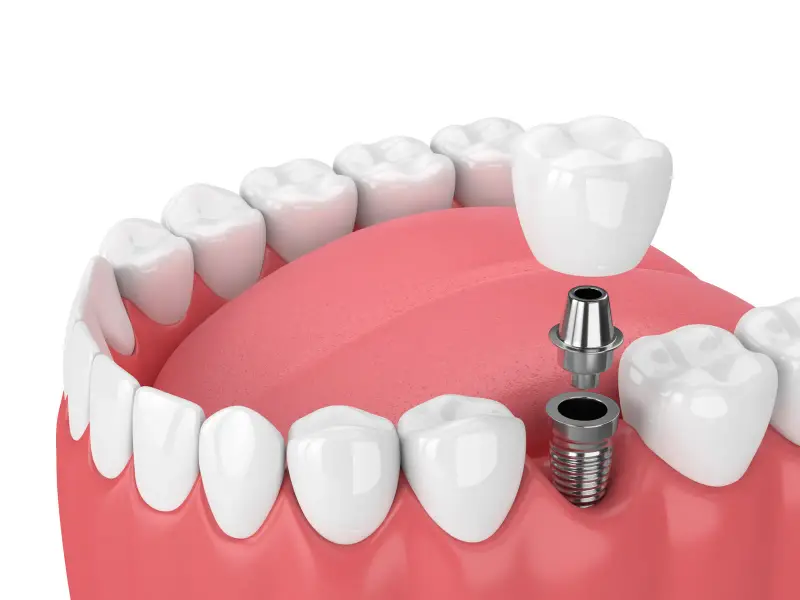
A dental implant replaces both the tooth and its root.
It consists of:
- A titanium implant placed in the jawbone
- A connector (abutment)
- A custom dental crown
The implant integrates with the bone, creating a stable, standalone replacement.
You can learn more about treatment through dental implants at Marina Dentistry.
What is a dental bridge?
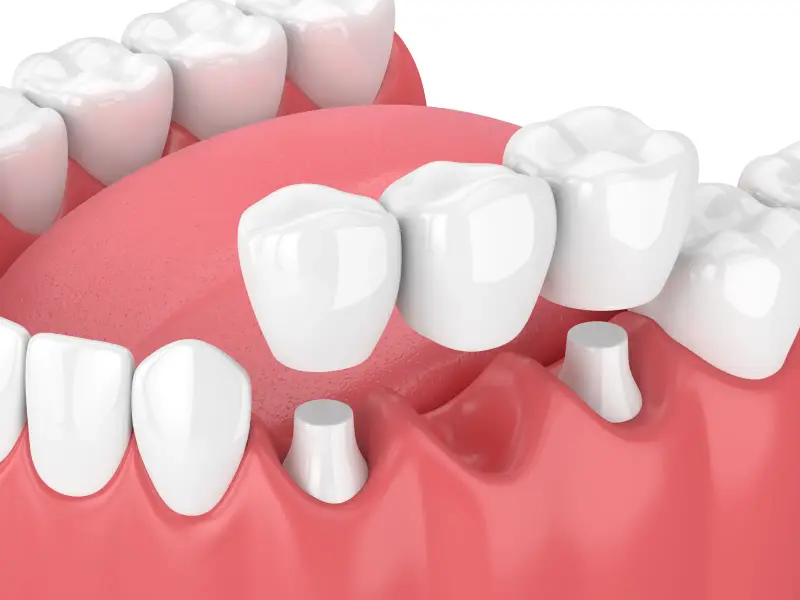
A dental bridge replaces a missing tooth by:
- Anchoring a false tooth to the adjacent natural teeth
- Crowning the neighboring teeth for support
Bridges rely on existing teeth for stability rather than the jawbone.
Bridges are designed and managed as part of dentures and bridges.
Which option lasts longer? The short answer
- Dental implants: often 20+ years, frequently a lifetime with proper care
- Dental bridges: typically 7 to 15 years, sometimes longer with excellent maintenance
Longevity is one of the biggest differences, but it’s not the only one that matters.
Why dental implants last longer
1. Implants replace the tooth root
Dental implants integrate with the jawbone, mimicking a natural tooth root.
This provides:
- Exceptional stability
- Even force distribution
- Protection against bone loss
Because implants don’t rely on neighboring teeth, they remain stable over time.
2. Implants don’t stress adjacent teeth
Implants stand alone.
They do not:
- Require grinding down healthy teeth
- Transfer chewing force to neighboring teeth
- Increase cavity risk on adjacent teeth
This independence significantly contributes to long-term success.
3. Bone preservation matters
When a tooth is lost, the jawbone begins to shrink.
Dental implants:
- Stimulate the bone
- Help preserve jaw structure
- Maintain facial support
Bridges do not prevent bone loss in the missing-tooth area, which can affect long-term outcomes.
Why dental bridges have a shorter lifespan
Dental bridges can be very effective, but their design creates inherent limitations.
1. Bridges depend on supporting teeth
Bridges rely on neighboring teeth (called abutment teeth).
Over time:
- These teeth bear extra force
- Crowns may loosen or decay
- Gum recession may expose margins
If a supporting tooth fails, the entire bridge is compromised.
2. Higher risk of decay at the margins
Even well-made bridges create:
- Hidden margins
- Hard-to-clean areas
- Increased plaque accumulation
Decay under bridge crowns is one of the most common reasons bridges need replacement.
3. Bone loss continues under a bridge
Because no root replaces the missing tooth:
- Bone resorption continues
- Gum contours may change
- Aesthetic issues may develop over time
This doesn’t always cause immediate problems, but it affects long-term stability.
Longevity comparison: implants vs bridges
- Average lifespan. Dental Implants: 20+ years / lifetime. Dental Bridges: 7 to 15 years.
- Bone preservation. Dental Implants: Yes. Dental Bridges: No.
- Impact on nearby teeth. Dental Implants: None. Dental Bridges: Requires alteration.
- Risk of decay. Dental Implants: Low. Dental Bridges: Higher at margins.
- Maintenance. Dental Implants: Similar to natural teeth. Dental Bridges: More complex cleaning.
- Long-term value. Dental Implants: Higher. Dental Bridges: Moderate.
Maintenance: which is easier long-term?
Dental implant maintenance
- Brush and floss like a natural tooth
- Regular dental cleanings
- Routine exams to monitor bone and gums
Implants do not decay, but gum health is critical.
Bridge maintenance
- Requires special flossing tools
- Harder to clean beneath the bridge
- Higher risk of plaque buildup
Maintenance is manageable, but more demanding.
Which option is more cost-effective long-term?
This is where many patients are surprised.
Bridges
- Lower upfront cost
- May require replacement multiple times
- Potential future work on supporting teeth
Implants
- Higher initial investment
- Rarely need replacement
- Protect surrounding teeth and bone
Over time, implants often prove more cost-effective, especially for younger or health-focused patients.
When a dental bridge might be the right choice
Despite longevity differences, bridges are still appropriate in some cases.
Bridges may be recommended if:
- Adjacent teeth already need crowns
- Bone volume is insufficient for implants
- Medical factors limit implant placement
- A quicker solution is preferred
- Budget considerations are significant
A good dentist presents bridges as an option, not a default.
When dental implants are usually the better long-term option
Implants are often ideal if:
- You want the longest-lasting solution
- Adjacent teeth are healthy
- Bone health is adequate (or can be restored)
- You value preserving jawbone
- You want a standalone replacement
For many adults, implants align better with long-term health goals.
What about aesthetics?
Both options can look excellent when designed properly.
However:
- Implants maintain gum contours better over time
- Bone preservation helps prevent “sunken” appearance
- Bridges may show aesthetic changes as bone resorbs
In visible areas, this difference can matter long term.
How dentists help you choose
Dentists consider:
- Overall oral health
- Bone quality
- Condition of adjacent teeth
- Bite forces
- Aesthetic goals
- Timeline and budget
- Long-term prognosis
The “best” option isn’t universal, it’s personal.
Quick answers
- Do implants really last for decades? Often yes, with proper care and maintenance.
- Can a bridge last longer than 15 years? Sometimes, but replacement is common over time.
- Is implant surgery risky? Implant procedures are predictable and well-studied when properly planned.
- Can implants fail? Yes, but failure rates are low with good planning and maintenance.
- Is a bridge faster than an implant? Yes, bridges usually require less treatment time upfront.
The bigger picture: longevity + health
Tooth replacement isn’t just about filling a space.
It’s about:
- Long-term oral health
- Protecting remaining teeth
- Preserving bone
- Minimizing future treatment
- Choosing value over convenience
Longevity matters, but so does what the replacement does to the rest of your mouth.
So… which replacement option lasts longer?
From a purely long-term perspective:
- Dental implants last longer
- Preserve bone
- Protect adjacent teeth
- Require fewer replacements over time
Bridges remain a valid option, but implants are often the gold standard for longevity.
At Marina Dentistry, treatment recommendations focus on:
- Long-term success
- Conservative planning
- Clear explanations
- Patient-specific solutions
This article is general information from Marina Dentistry and not a diagnosis. Only an exam can tell you what is right for your mouth. Request an appointment or call (310) 578-5000.