Implants

All-on-X full mouth dental implants in Marina del Rey

All-on-X is a full-arch implant treatment that replaces all the teeth in the upper or lower jaw with a fixed bridge supported by four to six implants. It is for people who have lost most of their teeth, or whose remaining teeth are failing, and who want replacement teeth that do not come out.

At Marina Dentistry the consultation ends with the imaging your case needs and a written plan with a price, before anything is scheduled.

Open six days a week, including Saturday
All PPO plans and several HMO plans accepted
Written estimate before any treatment
Led by Dr. Sameer Aljanedi, DDS

New patient offer

A published offer for this treatment

The same offer as on the specials page, with the fine print on the card. Claim it when you request your visit; we confirm the terms with you before anything is booked.

All new patient specials
On this page
  1. Overview
  2. Who it is for
  3. What to expect
  4. Candidacy and alternatives
  5. Technology
  6. Aftercare
  7. Cost and financing
  8. FAQ
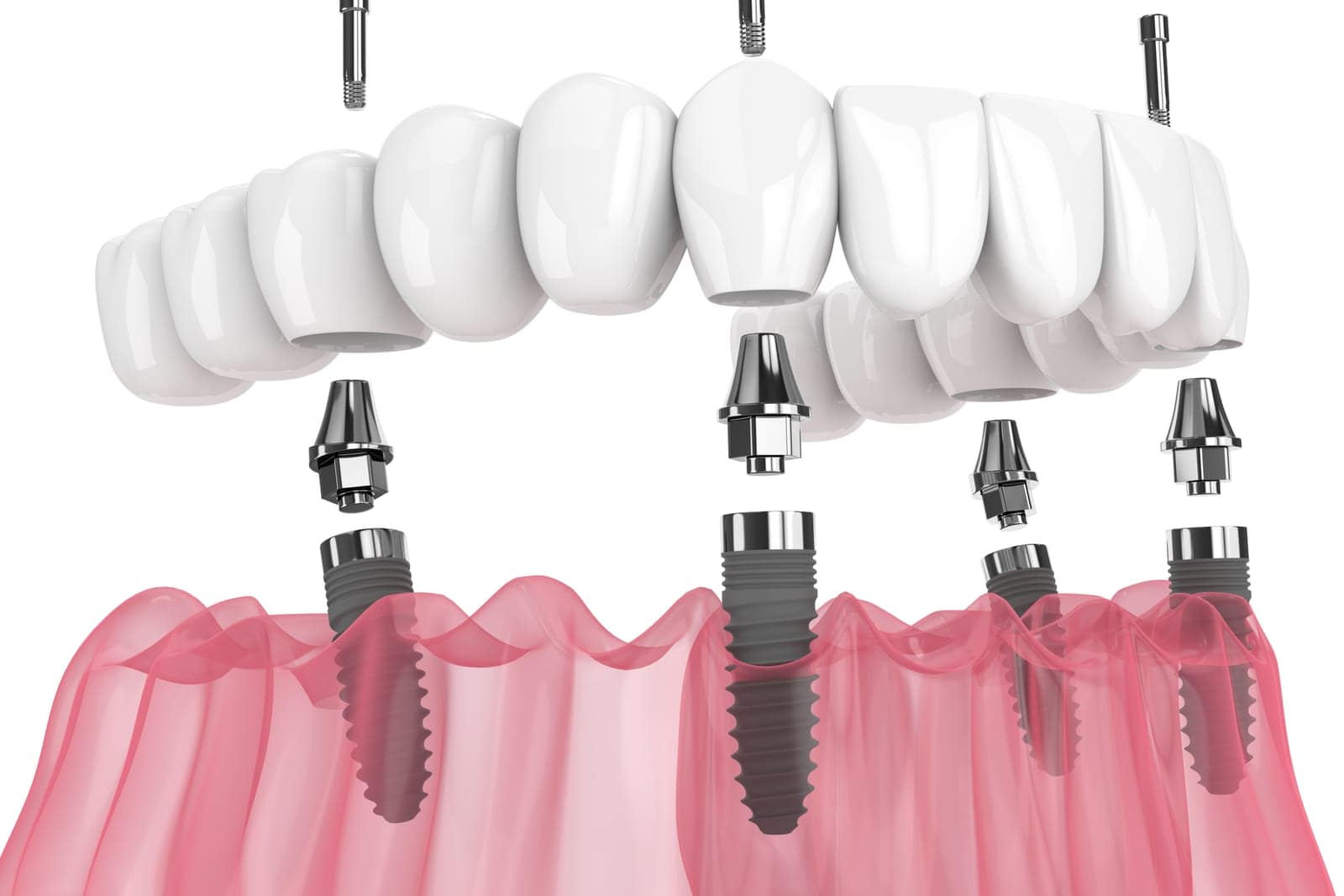
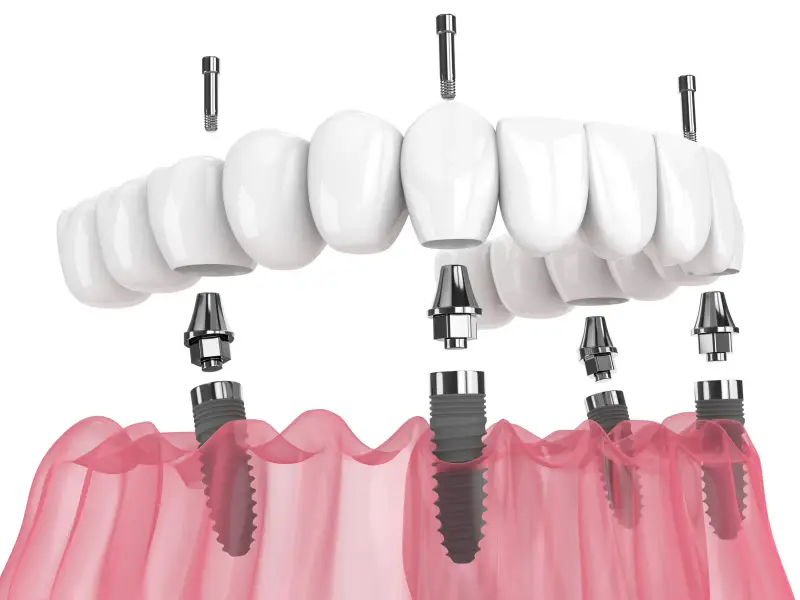
Model of a full-arch bridge being seated onto four implants in the lower jaw

Quick facts

Good for
Most or all teeth missing or failing in one or both jaws
Implants per arch
Usually four to six
Timeline
Often four to eight months from planning to final bridge
Anesthesia
Local; sedation options available

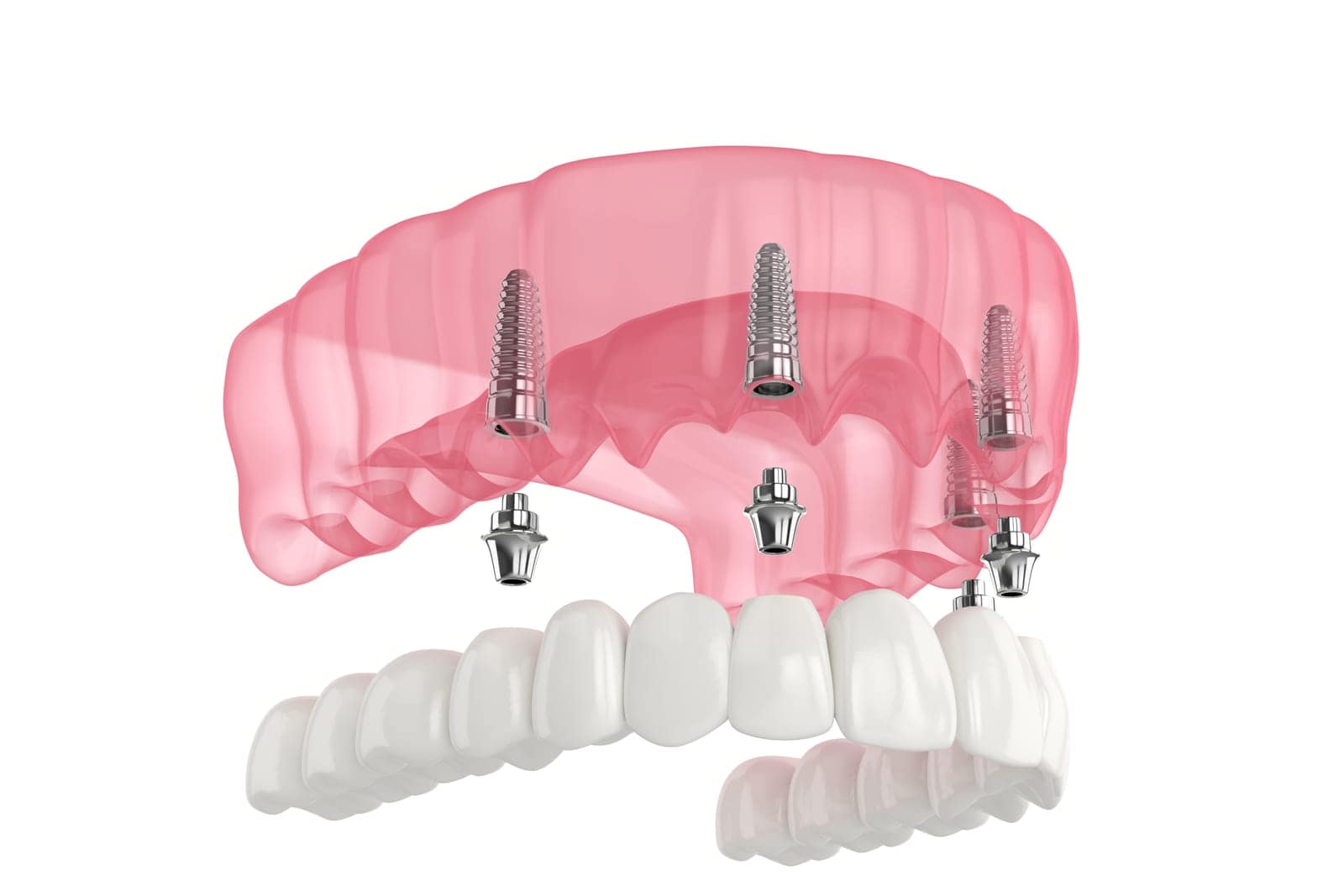
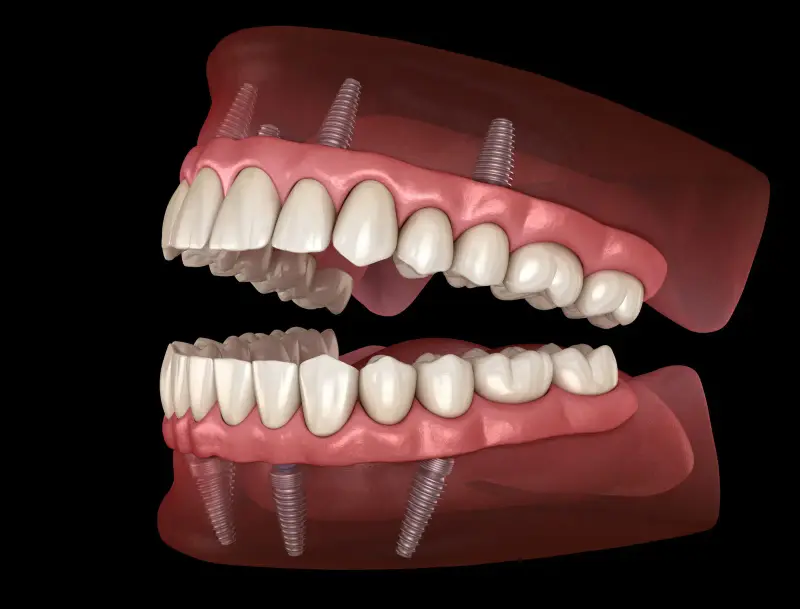
When most of your teeth are gone or failing, All-on-X replaces them all at once. Four to six implants are placed in the jaw at angles that make the most of the bone you have, and a single fixed bridge of replacement teeth attaches to them. The X stands for the number of implants your case needs.

The bridge is secured to the implants and comes off only when the dentist removes it for maintenance. Compared with a conventional denture, the bite is far more stable and the implants keep the jawbone working so it shrinks less over time.

Fixed bridge or snap-in denture?

All-on-X is one of two main full-arch implant options. The other is an implant-supported overdenture, which snaps onto fewer implants, costs less and comes out at night. We walk through both so the choice fits your mouth, your health and your budget.

Who this is for

  • You wear a full denture and it moves, rubs or limits what you eat
  • Most of your remaining teeth are loose, decayed or broken down
  • You want replacement teeth that stay in and need no adhesive

Some patients learn at the consultation they can keep healthy teeth and treat the rest with single implants or a bridge instead.

What to expect, step by step

  1. Consultation and planning

    Your dentist examines your teeth, gums and bite, reviews your medical history and takes images to measure bone. Scans guide the design of your new teeth, so shape and shade are decided before surgery. You get a written plan.

  2. Extractions and implant placement

    Any remaining teeth in the arch are removed and the implants are placed in the same appointment under local anesthesia, with sedation if you choose it. Grafting is sometimes done at the same time.

  3. Provisional bridge

    A temporary fixed bridge is attached once the implants are stable enough, often within days and sometimes the same day. If stability is not there yet, a temporary denture is used while you heal.

  4. Healing

    Over three to six months the bone fuses to the implants. You eat softer foods and come in for checks as swelling goes down.

  5. Final bridge

    Once the implants are solid, new impressions are taken and your final bridge is made in stronger materials. It is fitted, your bite is adjusted, and you learn how to clean underneath it.

Are you a candidate?

Good candidates have enough bone to anchor four to six implants, healthy or treatable gums and general health that allows healing. If bone is thin toward the back of the jaw, angled implants often work around it, and bone grafting or a sinus lift can build support where needed. Uncontrolled diabetes, heavy smoking, some bone medications and prior radiation to the jaw raise the risk of implants not integrating; you may be asked to see your physician or stop smoking first.

Alternatives worth discussing

  • Implant-supported overdenture. A removable denture that snaps onto two to four implants. More stable than a regular denture and less costly than a fixed bridge, but you still take it out at night.
  • Conventional complete denture. No surgery and the lowest up-front cost. The trade-offs are movement while eating, a plate over the palate and ongoing bone loss.
  • Individual implants and bridges. If several of your teeth are healthy, keeping them and replacing only the missing ones can be the better long-term choice.

Technology and materials

Imaging that shows bone in three dimensions may be used to place implants safely around nerves and sinuses, and surgical guides may help transfer the plan to your mouth.

Recovery and aftercare

Expect swelling and soreness for several days after surgery. Cold packs, medication and rest make the first week manageable. Soft foods are the rule while the implants heal, and smoking should be avoided completely.

  • Brush the bridge twice daily and clean under it with floss threaders or a water flosser
  • Keep checkups and professional cleanings so the gums around the implants stay healthy
  • Wear a night guard if you clench or grind

Cost and financing

The fee depends on how many implants are placed, whether grafting is needed, how many teeth are removed, the material of the final bridge and whether sedation is used. You receive a written plan with a cost estimate, and we check your insurance benefits. We accept all PPO plans and a range of HMO plans; confirm your plan with the office. Payment plans through Cherry, CareCredit and Sunbit are available, subject to credit approval. See financing and insurance.

What changes the cost

  • One arch or both
  • Number of implants
  • Whether bone grafting or sinus lifts are needed
  • Number of teeth to remove
  • Final bridge material
  • Sedation

FAQ

Questions about All-on-X

How much does All-on-X cost?

The fee depends on whether you treat one arch or both, how many implants are placed, whether grafting is needed and the material of the final bridge. Because those factors vary so much, we do not list a price online. You receive a written estimate after your consultation, plus payment plan options through Cherry, CareCredit and Sunbit.

Do you really get new teeth in one day?

Sometimes, but not always, and we do not promise it. A temporary bridge can be attached the day of surgery when the implants are stable enough. When they are not, a temporary denture is used until they heal. Either way, the final bridge comes months later once the bone has fused to the implants.

Is All-on-X surgery painful?

The surgery is done under local anesthesia, often with sedation if you choose it, so you should not feel pain during it. Afterward, expect swelling and soreness for several days, similar to having several teeth removed. Most patients manage with prescribed or over-the-counter medication and feel noticeably better within a week.

How long does the whole All-on-X process take?

Most patients go from consultation to final bridge in four to eight months. Planning takes a few weeks, surgery is a single appointment, and the implants then need three to six months to fuse with the bone. If grafting is required first, add several months of healing before implants are placed.

What if I do not have enough bone for implants?

Many people who were told they lack bone can still have a full-arch bridge. Angled implants reach denser bone toward the front of the jaw, and bone grafting or a sinus lift can rebuild areas that have shrunk. Imaging at your consultation shows exactly what you have, and your dentist explains the options from there.

Ready to take the next step?

Request a time online and we will confirm by phone or text during office hours. Same-day visits for dental emergencies.