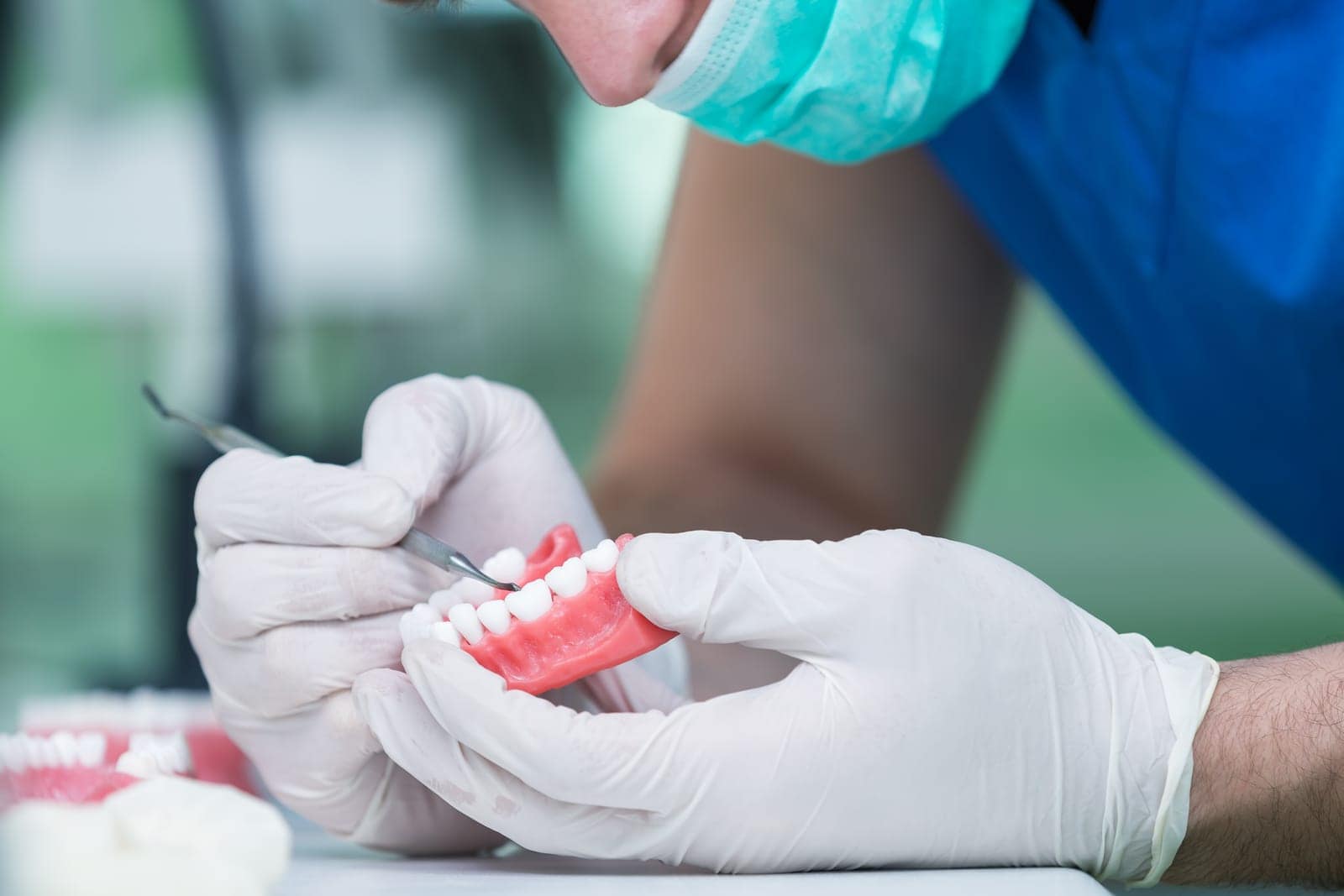
Complete denture
$899 per arch
A complete denture for one arch.
$1,800 value. Per arch; extractions, relines and implant options are quoted separately. New patients. Cannot be combined with insurance benefits or other offers.
Restorative
Dentures and bridges replace missing teeth without implants. A fixed bridge is cemented to the teeth beside a gap and stays in place. A partial denture is removable and replaces several teeth. A complete denture replaces all the teeth in a jaw. They suit people who want a faster or lower-cost route than implant surgery.
At Marina Dentistry every visit ends with a written plan and a price before anything else is scheduled.
New patient offers
The same offers as on the specials page, with the fine print on each card. Claim one when you request your visit; we confirm the terms with you before anything is booked.
All new patient specials$899 per arch
A complete denture for one arch.
$1,800 value. Per arch; extractions, relines and implant options are quoted separately. New patients. Cannot be combined with insurance benefits or other offers.
Complimentary
A consultation with your dentist including full-mouth X-rays and an examination, so you leave with a clear picture and a written plan.
Consultation and X-rays only. New patients. Cannot be combined with insurance benefits or other offers.
Not everyone wants, or can have, implants. Modern dentures and bridges are lighter, more natural-looking and more comfortable than the ones your grandparents wore. The right choice depends on how many teeth are missing, where they are and the health of the teeth around them.
A bridge fills a gap of one to three teeth by anchoring a row of connected crowns to the teeth on either side. Those anchor teeth are shaped the same way they would be for crowns, and the bridge is cemented on. It does not come out.
When several teeth are missing in different places, a partial denture replaces them on a single removable frame that clips onto your remaining teeth. Partials are the most economical way to replace multiple teeth and keep your remaining teeth from drifting.
A complete denture replaces every tooth in the upper or lower jaw. It rests on the gums and, for the upper, uses suction against the palate. A denture can be made after extraction sites heal or as an immediate denture placed the day teeth are removed. If stability is a concern, two to four implants can hold it in place; see implant-supported dentures.
If keeping jawbone and avoiding wear on neighboring teeth matter most to you, dental implants deserve a look. We lay out both paths.
Your dentist examines your remaining teeth, gums and bite, takes X-rays and talks through which option fits your situation and goals.
For a bridge, the anchor teeth are shaped under local anesthesia. For dentures, any teeth that cannot be saved are removed and the gums are given time to heal unless an immediate denture is planned.
Impressions of your mouth, plus measurements of how your jaws meet, go to the lab. For dentures, a wax try-in lets you see the tooth shape and shade before the final is made.
The bridge is tried in, adjusted and cemented. A denture is fitted, checked for pressure points and adjusted for speech and chewing.
Dentures in particular need a few adjustment visits as your gums adapt and sore spots are relieved.
Bridges need healthy, well-rooted anchor teeth on both sides of the gap. Partials need enough stable teeth to clip onto. Complete dentures need a healthy ridge of gum and bone, which is why extraction sites are allowed to heal first. Active gum disease is treated before any of these so the supporting teeth and gums are stable.
Three common ways to replace a missing tooth. Which one fits depends on your bone, your gums, the teeth next to the gap and what you want day to day. This is the conversation your dentist has with you at the consultation.
| Dental implant | Fixed bridgeThis page | Removable dentureThis page | |
|---|---|---|---|
| How it stays in | A post in the jawbone holds the new tooth | Crowns on the teeth either side hold it | Rests on the gums, clipped to teeth if any remain |
| Teeth next to the gap | Left alone | Reshaped to hold crowns | Usually left alone; clasps may rest on them |
| Surgery | Yes, a minor procedure under local anesthetic | No | No, unless teeth need to come out first |
| Bone under the gap | Helps keep the bone where the post sits | Bone under the gap keeps shrinking slowly | Bone keeps shrinking; the fit changes over time |
| Typical timeline | Several months, mostly healing time | Usually a few weeks | Usually a few weeks |
| Day to day | Brushed and flossed like a natural tooth | Cleaned under with a floss threader or water flosser | Taken out to clean and usually at night |
| Up-front cost | Highest of the three | In between | Lowest of the three |
Insurance often covers part of a bridge or denture and sometimes part of an implant. You get a written estimate before anything starts.
Bridges and dentures are made in a dental lab from impressions or scans of your mouth. Shades are matched to your other teeth or chosen to suit your complexion.
Bridges are cared for like crowns, with one extra step: cleaning under the connected teeth. Dentures need daily removal and cleaning so the gums underneath stay healthy.
Cost depends on the type of restoration, the number of teeth replaced, the materials and whether extractions or other work are needed first. Dental insurance commonly covers part of bridges and dentures. We accept all PPO plans and a range of HMO plans; confirm your plan with the office. You receive a written estimate before treatment. Payment plans through Cherry, CareCredit and Sunbit are available, subject to credit approval, and our membership plan helps patients without insurance. See financing and insurance.
FAQ
The fee depends on whether you need a bridge, a partial or a complete denture, how many teeth are replaced and the materials used. Insurance often covers a portion. We do not list prices online because the options vary widely, but you receive a written estimate with your insurance portion after your exam.
New dentures usually cause some sore spots during the first few weeks while your gums adjust and the fit is fine-tuned. That is normal and is relieved with small adjustments at follow-up visits. Bridge preparation is done under local anesthesia, and the anchor teeth may be sensitive for a short time afterward.
A conventional denture takes several visits over four to six weeks for impressions, bite records, a try-in and delivery, after any extraction sites have healed. An immediate denture is made beforehand and placed the day teeth are removed, then relined as the gums heal. A bridge usually takes two visits.
Neither is better for everyone. A bridge is faster, avoids surgery and makes sense when the neighboring teeth already need crowns. An implant leaves those teeth untouched and keeps the jawbone from shrinking, but takes months and costs more up front. Your dentist explains how each applies to your gap.
A well-made bridge often lasts ten years or more, with decay at the anchor teeth being the usual reason for replacement. Complete dentures typically need relining every few years and remaking after five to ten, because the gums and bone beneath them keep changing. Good daily cleaning extends both.
Related
Guides
Request a time online and we will confirm by phone or text during office hours. Same-day visits for dental emergencies.