What to expect in your first week with Invisalign
The first week with Invisalign usually brings pressure, a slight lisp and lips getting used to attachments. Here is what is normal, what helps, and when to call your dentist.
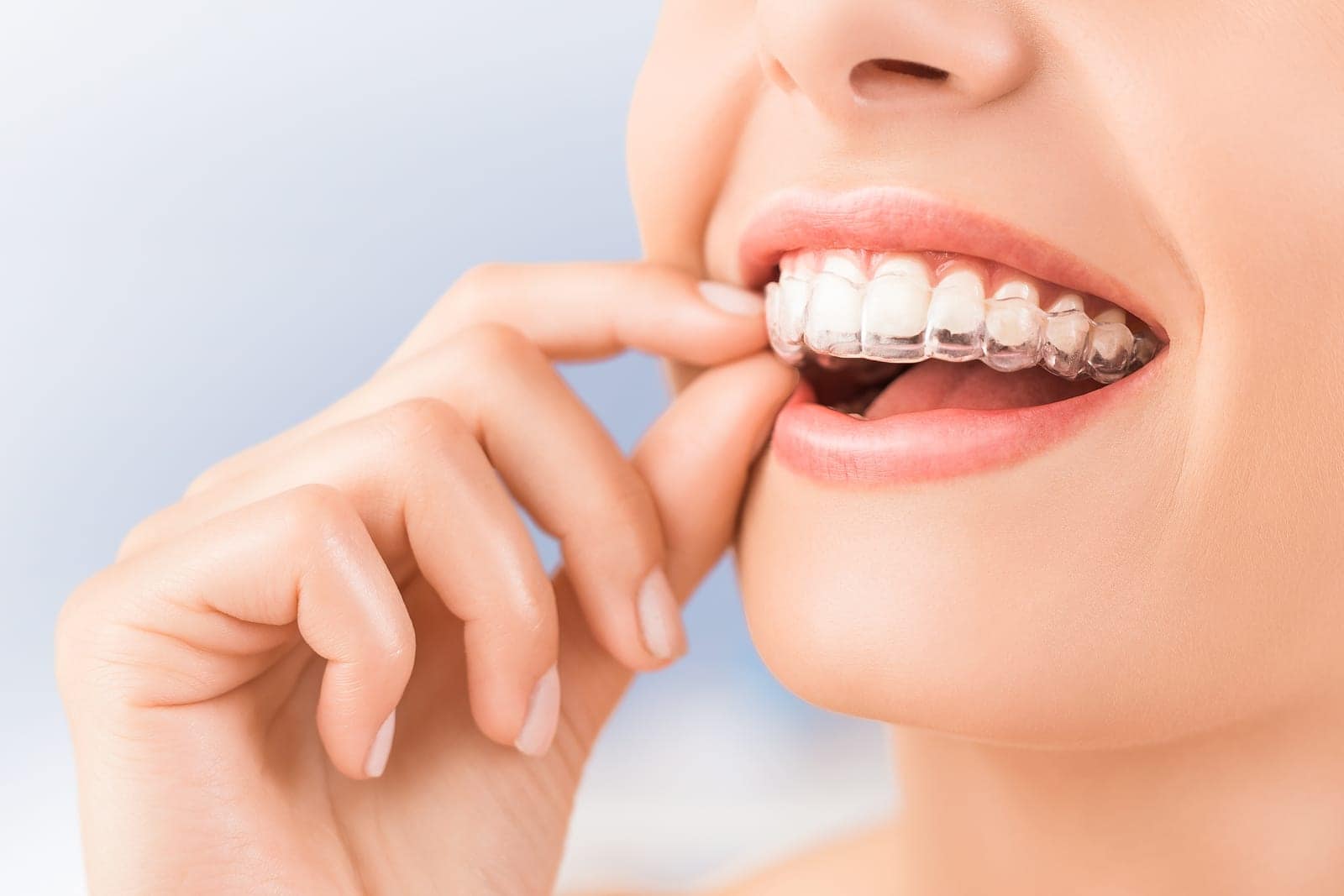
The first week with Invisalign is usually the hardest week of the whole treatment, and it gets easier faster than most people expect. Expect pressure on your teeth for the first few days, a slight lisp that fades as your tongue adjusts, and lips that need time to get used to the attachments. None of that means something has gone wrong. It means the aligners are doing their job.
Here is what the first seven days usually feel like for our patients in Marina del Rey, Venice and Playa Vista, what helps, and the handful of situations where you should pick up the phone.
Day one: the first tray goes in
Your first tray will feel tight. That is the point. Each aligner is made to be a little ahead of where your teeth are now, and the gentle, constant squeeze is what moves them. Most people describe it as pressure rather than pain, most noticeable when you bite down.
Two other things tend to surprise people on day one. The first is a lisp. The edge of the plastic sits where your tongue is used to meeting your teeth, so "s" and "th" sounds come out a little soft. Reading aloud for a few minutes, or simply talking through your normal day, retrains your tongue quickly. For most people the lisp is barely noticeable within a few days.
The second is extra saliva. Your mouth treats the new tray as something to be washed away, so you may swallow more often at first. That settles on its own.
Attachments: the small bumps that do the work
Attachments are small, tooth-colored pieces of composite bonded to certain teeth. They give the aligner something to grip so it can rotate a tooth or move it up or down, movements a smooth tray cannot manage alone. Not every tooth gets one. Your dentist places them based on what each tooth needs to do.
While the tray is in, they are rarely noticeable. When the tray is out, the inside of your lips and cheeks run across their edges, and for the first week or two that can feel sharp. The soft tissue in your mouth adapts to new shapes quickly, so for most people this fades on its own.
Until it does, orthodontic wax helps. Dry the attachment with a tissue, pinch off a piece of wax about the size of a small pea, and press it over the bump. If a particular edge is still cutting your lip after a couple of weeks, or you have a sore that is not healing, ask about smoothing. Rounding a sharp edge is a quick adjustment, and because Invisalign at Marina Dentistry is provided in the same office where you have your cleanings, it can usually be handled at a routine visit. Please do not file an attachment yourself.
Taking trays out and putting them in
Removal is the skill that frustrates new patients most, and it is almost always a technique problem rather than a tray problem.
Start at the back. On one side, slip a fingertip under the inside edge of the tray at the last molar and lift. Do the same on the other side. Then work forward along the inside, releasing a little at a time, until the tray comes free. Pulling from the front teeth first is the most common mistake: it bends the tray, it can crack it, and it fights directly against the attachments. If your fingers slip, dry them or use a tissue for grip.
Putting a tray in is the reverse. Seat it over your front teeth first, then press it down over the back teeth with your fingertips. Never bite a tray into place; that is a reliable way to crack one. Once it is in, chew on a "chewie," a small foam cylinder, for a few minutes. Chewies seat the tray fully and close the little air gaps you may see at the biting edges of a new tray.
The pain timeline, honestly
Pressure is at its peak in the first day or two of a new tray and eases over the days that follow. By the end of the first week most people only remember they are wearing aligners when they take them out to eat. The cycle repeats with each new tray, and for many patients each round is milder than the last.
A few things make the first days easier:
- Switch to a new tray at bedtime. The tightest hours pass while you sleep.
- Eat soft foods on the first day of a new tray. Soup, eggs, yogurt, pasta and fish are easier than a crusty sandwich.
- Use an over-the-counter pain reliever if you normally would, following the label. If you are unsure which is appropriate for you, ask your physician or pharmacist.
- Keep the trays in. Taking them out to "rest" makes the next insertion more uncomfortable, because the teeth drift back and the tray has to catch up.
Tenderness when biting is normal. What is not typical is sharp, throbbing pain in a single tooth, or pain that is getting worse rather than better after the first few days. Those deserve a call.
Eating and drinking with aligners
The rule is simple: take the trays out for everything except plain water. Chewing with aligners in cracks them. Sugary or acidic drinks seep under the plastic and sit against your enamel for hours, which is a quick route to cavities and white spots. Hot drinks can warp the tray so it no longer fits. And coffee, tea and red wine stain both the tray and the attachments.
In practice, the first week is when you build the routine:
- Eat, then brush before the tray goes back in. If you truly cannot brush, rinse well with water and brush as soon as you can.
- Carry a travel toothbrush and the aligner case. Trays wrapped in a napkin at a restaurant end up in the trash with remarkable reliability.
- Drink coffee in one sitting rather than sipping it over a whole morning. Every sip with the trays out counts against your wear time.
If the attachments pick up some stain over the months, the tooth underneath is not affected. The composite comes off at the end of treatment, and teeth whitening afterward is a common finishing step.
Cleaning your trays
Rinse the trays every time you take them out, and brush them gently once or twice a day with a soft toothbrush and clear, unscented hand soap or an aligner cleaning product. A short soak in cleaning crystals while you eat works well too.
A few things to avoid:
- Hot water. It warps the plastic.
- Toothpaste. Most are mildly abrasive and leave the tray cloudy.
- Colored mouthwash or colored soap. Both can tint the tray.
- Leaving trays out uncovered. They collect bacteria and get lost.
For a longer routine, see our earlier post on keeping your aligners clear and odor-free.
Wear time and what happens when you fall short
Align Technology, the company that makes Invisalign, recommends wearing aligners 20 to 22 hours a day, and your dentist confirms the target for your case.
Teeth move only while the tray is in. If you wear it for substantially less, the current tray starts to feel tight again each time you put it in. Then you may notice a gap between the tray and the biting edge of a tooth, meaning that tooth is lagging behind the plan. Dentists call this a tooth that is "not tracking." If it continues, the next tray will not seat at all.
One short day is not a disaster. A pattern of short days is. If you have had a rough week, wear the current tray for extra days rather than moving on, and mention it at your next visit. If a tray will not seat fully even with chewies, call rather than forcing it.
Changing trays
Your dentist sets how often you move to the next tray. Do not speed up because a tray feels loose; the last days of each tray are when the bone settles around the new tooth position. Change at night, use a tracking app or a calendar reminder, and keep the previous tray in its case as a backup.
If a tray cracks or goes missing, call the office that day. Depending on how far into that tray you are, your dentist may have you go back to the previous tray or move to the next one. Do not guess, and do not go without a tray while you wait, because teeth begin drifting within days.
When to call the office
Most first-week discomfort is normal and passes. Call us for any of the following:
- A tooth that is visibly not tracking after a week of full wear.
- A broken or missing attachment. The tray may suddenly feel loose at one tooth.
- Sharp, persistent pain in one tooth, or pain that is getting worse after the first few days.
- A sore on your lip or cheek that has not healed after two weeks.
- A cracked or lost tray.
- Gums that are swollen or bleeding and not improving with careful brushing.
Swelling that affects breathing or swallowing is an emergency room visit, not a phone call.
How Invisalign check-ins work at Marina Dentistry
Marina Dentistry is an Invisalign Gold Provider (2024), and the team led by Dr. Sameer Aljanedi, DDS, provides Invisalign in the same office where patients come for exams and cleanings. At each check-in your dentist looks at how your teeth are tracking against the plan, hands over your next trays, and handles small things like a sharp attachment or a tray that is not seating. Because it is one office, a check-in can often be paired with a routine cleaning, and our Saturday hours make tray-change timing easier for people with weekday schedules.
If you are still deciding between aligners and braces, our orthodontics page covers the options, and our post on what Invisalign costs in Marina del Rey explains what is typically included. And since every orthodontic treatment ends with a retainer, it is worth reading why teeth shift over time, even after braces before you finish.
A first visit at Marina Dentistry starts with a full exam and X-rays as needed, followed by a plain conversation about what you would like to change and whether aligners are a good fit. You leave with a written plan that includes pricing, so you can decide at home without pressure. We are at 4292 Lincoln Blvd in Marina del Rey and open six days a week, including Saturday. You can book online or read what to expect as a new patient.
This article is general information from Marina Dentistry and not a diagnosis. Only an exam can tell you what is right for your mouth. Request an appointment or call (310) 578-5000.