Why are my teeth yellow?
Yellow teeth usually come from surface stain, thinning enamel or both. What causes each, which medications play a part, what whitening can and cannot change, and when bonding or veneers come up instead.
Teeth usually look yellow for one of two reasons, and often both: stain on or in the enamel from coffee, tea, wine and tobacco, and the natural yellow of the layer underneath, called dentin, showing through enamel that has thinned with age. Surface stain often comes off with a cleaning, yellow from inside the enamel usually responds well to whitening, and a few kinds of discoloration need a different approach altogether.
This post explains where tooth color comes from, the difference between surface stains and deeper color, how aging and certain medications play a part, what whitening can and cannot change, and when your dentist might talk about bonding or veneers instead. It is for anyone who has looked at a photo and wondered whether their teeth are yellower than they used to be, and whether anything can be done.
Where tooth color comes from
A tooth is built in layers. The outer layer, enamel, is hard and slightly translucent, a little like frosted glass. Underneath it is dentin, which is softer and naturally yellowish. The color you see is a blend of the two: light passes through the enamel, picks up some of the dentin's color, and bounces back.
That is why teeth are never truly paper white, and why two people with equally healthy teeth can have quite different shades. Thicker, more opaque enamel tends to look whiter. Thinner, more translucent enamel lets more of the dentin show, so teeth look more yellow or slightly gray at the edges. Some of this is simply genetics, the same way skin and hair color vary.
Anything that adds pigment to the enamel, or lets more dentin show through, makes teeth look darker. Those two routes explain almost every case of yellowing.
Surface stains: the most common cause
Stains that sit on the outer surface of the enamel are called extrinsic stains. Cleveland Clinic's page on tooth discoloration describes them as discoloration that affects the outer surface of the teeth, usually from food and drink.
The usual sources are familiar. The ADA's MouthHealthy page on teeth whitening names coffee, tea and red wine as major staining culprits, and notes that two chemicals in tobacco, tar and nicotine, create stubborn stains. Cola, dark berries, curry, soy sauce and balsamic vinegar add to it. Our post on how smoking and vaping affect your gums covers what tobacco does beyond the color.
Plaque and tartar make surface stain worse. Plaque is sticky and holds pigment, and tartar, the hardened version along the gumline, is rough and stains easily. That is why teeth often look noticeably lighter right after a professional cleaning, even with no whitening at all.
What helps with surface stain:
- Regular cleanings, which polish off stain and remove tartar you cannot brush away
- Brushing twice a day, especially after coffee or tea, or at least rinsing with water afterward
- A whitening toothpaste. MouthHealthy suggests looking for one with the ADA Seal of Acceptance for stain removal. These polish surface stain; they do not change the color inside the tooth.
- A straw for iced coffee, iced tea and dark sodas
Deeper color: aging, wear and enamel thinning
Color that comes from inside the tooth is called intrinsic discoloration. Cleveland Clinic describes it as starting inside the tooth and affecting the dentin. It does not brush or polish off.
Aging is the most common reason. MouthHealthy explains that over time the outer enamel gets thinner with brushing, so more of the yellowish dentin shows through. Cleveland Clinic makes the same point: as you grow older, enamel thins and exposes more of the dentin underneath. Years of small stains working their way into the enamel add to the effect.
Acid wear speeds up enamel thinning. Frequent soda, sports drinks, citrus, sour candy and acid reflux all soften enamel briefly each time, and brushing hard right afterward can wear softened enamel away. The result is teeth that look more yellow and often feel more sensitive. Thinner front edges may look slightly see-through or grayish.
Grinding and clenching wear down the biting edges, which can expose dentin at the tips of the teeth.
An injury to a tooth, even years ago, can make that single tooth darken over time. A tooth that turns gray, brown or noticeably darker than its neighbors is worth having checked, because it can mean the nerve inside has been damaged.
Medications and childhood factors
Some medications affect tooth color. MouthHealthy lists certain antihistamines, antipsychotics and high blood pressure medications among the drugs that can cause tooth darkening as a side effect. Cleveland Clinic notes that adults who took the antibiotics tetracycline or doxycycline during childhood, while their teeth were forming, may have discoloration, which often looks gray or banded rather than yellow.
Cleveland Clinic also notes that people who consumed high levels of fluoride in childhood may develop white spots on their teeth.
If you think a medication is affecting your teeth, do not stop it on your own. Talk to the doctor who prescribed it, and mention it to your dentist, who can focus on keeping surface stain under control.
What whitening can change
Professional teeth whitening uses a peroxide gel that passes into the enamel and breaks apart the stain molecules inside it. That is why whitening lightens the color of the tooth itself rather than only polishing the surface. Cleveland Clinic notes that professional whitening is most effective on surface stains.
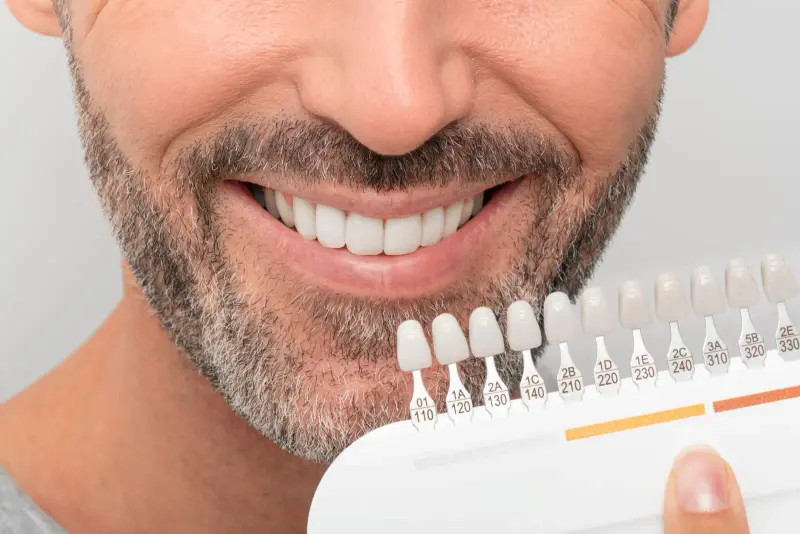
How well it works depends on the kind of color you are starting with. MouthHealthy explains that yellow teeth will probably bleach well, brown teeth may not respond as well, and teeth with gray tones may not bleach at all. In practice, the everyday yellowing from coffee, tea and age is the kind that usually responds most reliably.
Whitening has limits worth knowing before you start:
- It does not change crowns, veneers or fillings. MouthHealthy states that whitening will not work on caps, veneers, crowns or fillings. Porcelain and composite keep the shade they were made in, so an older crown or front filling can look darker once the teeth around it are lighter.
- It does not rebuild thin enamel. If dentin is showing because enamel has worn away, whitening can lighten it somewhat, but it cannot add back the enamel that made the teeth look brighter.
- It does not fix single dark teeth reliably. A tooth that darkened after an injury or a root canal often needs its own approach, such as whitening from inside the tooth.
- It wears off over time. The same habits that stained teeth in the first place bring the stain back gradually.
Our post on whitening sensitivity and how long results last covers what to expect and how to keep the result longer.
When bonding or veneers are discussed instead
Sometimes whitening alone will not get you where you want to be. Your dentist may bring up other options when the color is gray or banded, when a single tooth is much darker than the rest, when enamel is thin or worn, or when chips and uneven edges are part of what bothers you.
Bonding uses tooth-colored resin applied to the front of the tooth and shaped by hand. Cleveland Clinic notes that dentists may recommend bonding for deep discoloration that does not improve with whitening. It suits a few teeth, small chips and modest color problems, and usually needs little or no shaping of the tooth.
Porcelain veneers are thin shells bonded to the front of the teeth. Cleveland Clinic notes that veneers may be worth considering for widespread discoloration that does not improve with whitening. They cover the color completely and can change shape and length at the same time, but they involve removing a thin layer of enamel and they need replacing eventually. Our porcelain veneers page explains how they are planned.
Order matters. If you are planning bonding, veneers or a new crown on a front tooth, whitening usually comes first, so the new work is matched to the lighter shade. A cosmetic treatment plan puts these steps in the right sequence so the whole smile ends up one color.
When yellow teeth are a reason to get checked
Most yellowing is cosmetic. A few patterns are worth a closer look rather than a whitening kit:
- One tooth that is noticeably darker, grayer or browner than the others
- Brown or black spots, which can be decay rather than stain
- Teeth that are yellowing along with new sensitivity to cold or sweets
- Edges that look thin, see-through or chipped
- Yellowing near the gumline where the gums have pulled back, which may be exposed root rather than stain
What a cosmetic visit at Marina Dentistry involves
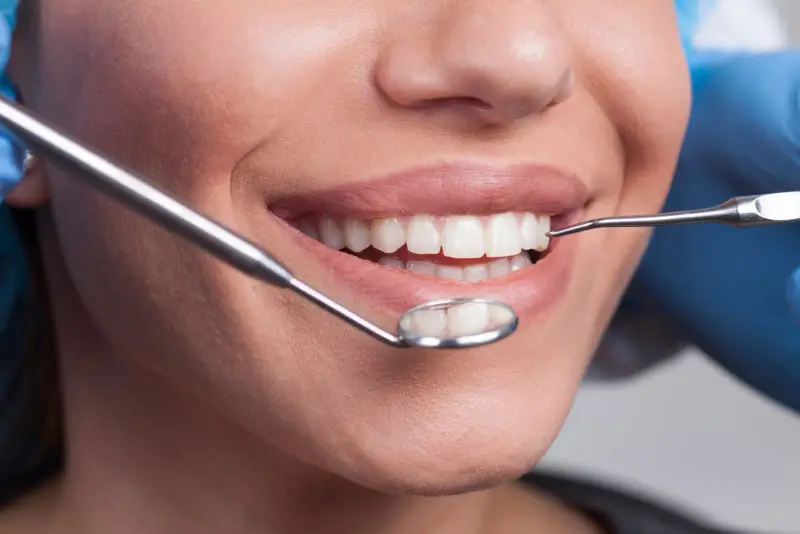
A cosmetic visit at Marina Dentistry starts with an exam, not a shade guide. Your dentist checks for decay, worn enamel, gum recession and older restorations that would not whiten, takes X-rays only as needed, and explains what is causing the color you see. If you choose treatment, you get a written plan with pricing before anything starts. We accept all PPO plans and a range of HMO plans, including Delta Dental and Anthem; confirm your plan with the office. We are at 4292 Lincoln Blvd in Marina del Rey and open six days a week, including Saturday from 8 AM to 4 PM. Call (310) 578-5000, book online, or read our new patient page.
This article is general information from Marina Dentistry and not a diagnosis. Only an exam can tell you what is right for your mouth. Request an appointment or call (310) 578-5000.