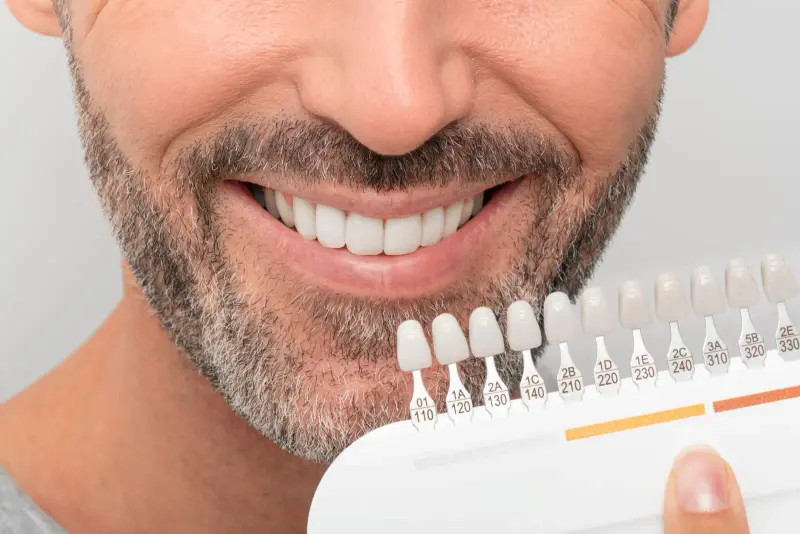
Teeth whitening sensitivity and how long results last
Whitening sensitivity is common, short-lived and manageable, and results last months to a couple of years depending on habits. What causes the zings, what helps, and how to time whitening around an event or new veneers.
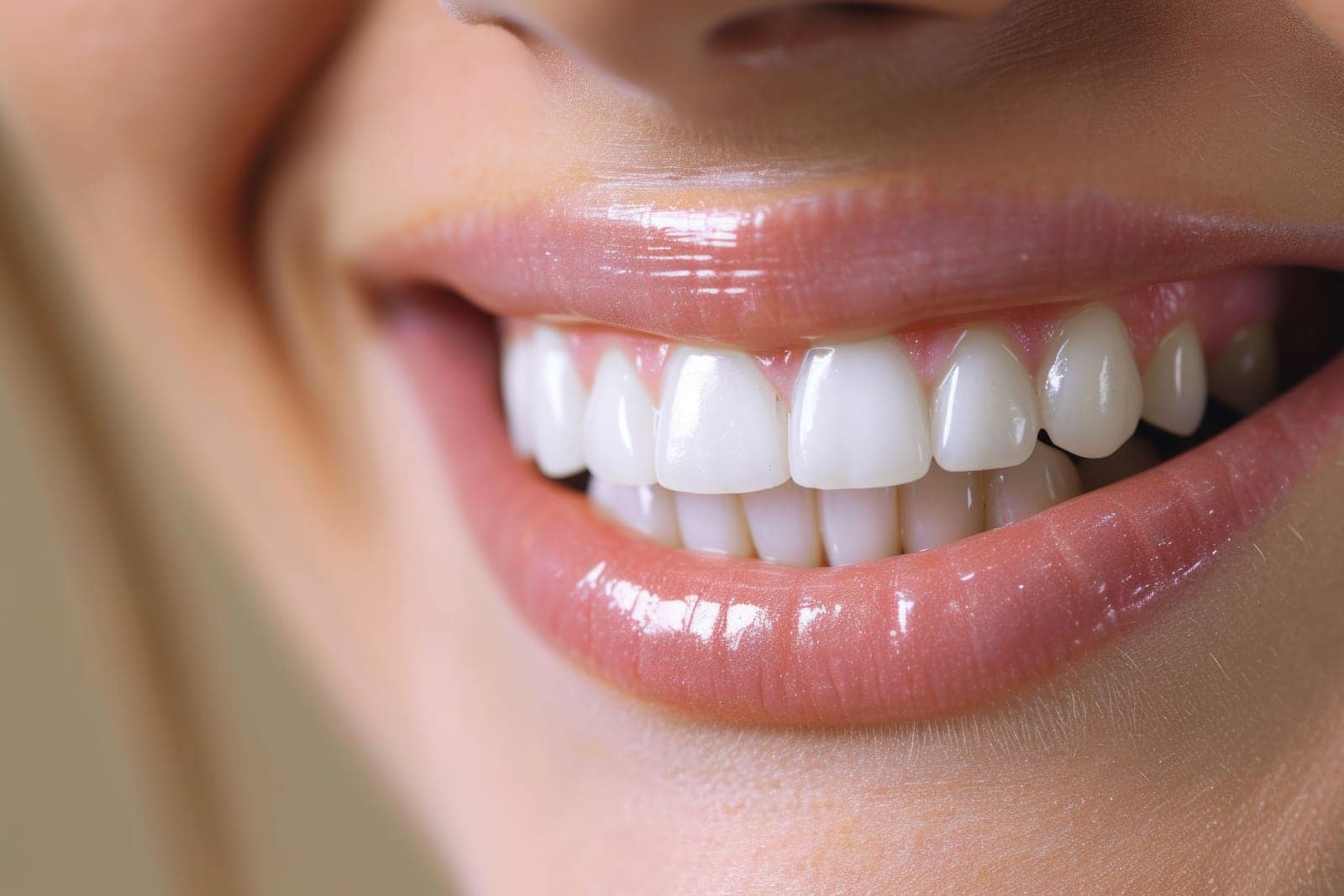
Sensitivity after teeth whitening is common, temporary and usually mild: brief zings when cold air or water touches the teeth, fading over the next day or two as the enamel rehydrates. Results from professional whitening typically last months to a couple of years, and how long depends far more on coffee, tea, red wine and tobacco than on which product you used.
This post explains why whitening causes sensitivity, what helps, what shortens results, how in-office treatment compares with trays and strips, and how to time whitening around an event or new veneers. It is for anyone planning whitening before a date on the calendar, and for anyone who tried strips once, hated the sensitivity, and wants to know whether a dentist can do better.
Why whitening causes sensitivity, and why it passes
Whitening gels contain peroxide, which passes through the enamel and breaks apart the stain molecules inside it. That is why whitening changes the color of the tooth itself rather than polishing the surface. Two side effects come with that.
First, the peroxide also reaches the dentin, the softer layer under the enamel that contains tiny fluid-filled tubes connected to the nerve. Anything that disturbs the fluid in those tubes, including peroxide and the cold air you breathe during a session, registers as a sharp, short pain. Second, whitening temporarily draws water out of the enamel. Dehydrated enamel is more porous, so hot, cold and sweet reach the dentin more easily than usual.
Both effects reverse on their own. As the peroxide clears and the enamel takes water back from saliva, the tubes settle and the zings fade. That is why whitening sensitivity feels dramatic for a short time and then disappears, unlike the dull, lingering ache of a cavity.
Some people are more prone than others: thin enamel, gum recession, recent dental work, existing sensitivity to cold, and hard brushing all raise the odds. None rules whitening out, but each changes how your dentist sets the strength and pace.
How long sensitivity lasts and what helps
For most patients, sensitivity peaks during or just after a session and is largely gone within a day or two, with the occasional twinge for a few days after that. Sensitivity that lasts beyond a week, or a steady ache concentrated in one tooth, is not typical of whitening and is worth a call, because it usually means a cavity, a crack or an exposed root was there before the whitening and the gel simply found it.
What helps, in rough order of usefulness:
- Desensitizing toothpaste before you start. Toothpastes with potassium nitrate or stannous fluoride calm the nerve response over time. Beginning a week or two before whitening, and continuing through it, makes a noticeable difference for many people.
- A gentler schedule. Shorter sessions, a lower-strength gel, or whitening every other day instead of daily gets to the same shade with less discomfort. Custom trays make this easy to adjust.
- Fluoride. A fluoride varnish or gel applied at the office, or a prescription fluoride paste at home, helps block the dentin tubes.
- Avoiding temperature extremes for a day. Skip iced drinks, hot coffee and ice cream until the enamel rehydrates.
- An over-the-counter pain reliever you already take safely, following the label, after an in-office session if needed.
If a take-home session is uncomfortable, take the trays out, rinse, and wait a day. Pushing through does not speed the result.
How long results last and what shortens them
Whitening clears the stain that has built up, and then the same habits that stained your teeth begin working again. Professional whitening typically holds for months to a couple of years, and where you land in that range depends on three things.
The first is diet. Coffee, black tea, red wine, cola, dark berries, curry and soy sauce all deposit pigment, and acidic drinks soften enamel briefly so pigment settles in more easily. A straw, a rinse with water afterward and a short wait before brushing all help.
The second is tobacco in any form, including vaping, which stains quickly and evenly.
The third is home care and professional cleanings. Surface stain builds on plaque and tartar, so a regular cleaning keeps teeth looking lighter between sessions. Many patients use their custom trays for a night or two every few months as a touch-up, which maintains the shade without repeating a full in-office session.
The first day or two after whitening matters most. Enamel is at its most porous then, which is why dentists suggest a "white diet" of pale foods and water until the teeth rehydrate.
In-office whitening, take-home trays and store-bought strips
All three use peroxide. The differences are strength, fit and supervision.
In-office whitening uses the strongest gel, applied in one visit with your gums covered by a protective barrier. Most people see a clear change in that visit, which makes it the option for a deadline. Sensitivity on the day is more likely with the stronger gel, and your dentist can take steps before and after to limit it.
Custom take-home trays are molded from an impression or scan of your teeth, so the gel sits evenly against every tooth and stays off the gums. You wear them with a milder gel for a set time each day over a week or two. The result builds gradually, sensitivity is usually lower, and you keep the trays for touch-ups. Many patients combine the two: an in-office session for the initial lift, then trays to finish and maintain.
Store-bought strips and pens use the lowest strength and a one-size fit. They do lighten teeth, and for even, mild staining in a healthy mouth they are a fair place to start. Their weaknesses are predictable: strips miss the curves between teeth, so results can look uneven; gel spills onto the gums and stings; and nobody has checked first for cavities, cracks or exposed roots, which is where the painful experiences come from.
In short, strips cost less and do less, trays cost more and do more with less sensitivity, and in-office treatment costs the most and is fastest. Our teeth whitening page describes the two professional options, and the practice publishes a whitening offer for new patients on the specials page.
Whitening with crowns, veneers and fillings
Peroxide only lightens natural tooth structure. Porcelain and composite do not change color, so a crown, veneer or tooth-colored filling will stay exactly the shade it was made. That has two practical consequences.
If you whiten around an older crown or filling, it can end up looking darker than its neighbors, which may be fine on a back tooth and not on a front one. Your dentist will point out which restorations would show before you start.
If you are planning new porcelain veneers, a new crown or a front filling, whiten first, so the new restoration is matched to the lighter shade and the whole smile reads as one color. Once porcelain is made it cannot be lightened to catch up. The practice can plan whitening and restorations together as part of a cosmetic treatment plan so the shades line up.
Who should wait or skip whitening
Whitening is for healthy mouths. Your dentist will typically suggest waiting, or choosing a different approach, if any of these apply:
- Untreated decay or leaking fillings. Gel reaching the inside of a cavity causes real pain and does nothing useful. Fix the tooth first.
- Exposed root surfaces from gum recession. Roots have no enamel, so they do not whiten and they sting badly. Trays can be trimmed to avoid them.
- Active gum disease. Inflamed gums react poorly to peroxide, and treatment comes first.
- Pregnancy and breastfeeding. There is no evidence of harm, but there is also little safety data, so most dentists advise waiting. Whitening is never urgent.
- Children and teens. The American Academy of Pediatric Dentistry discourages whitening while a child still has baby teeth or a mix of baby and adult teeth, because young teeth have larger nerves and thinner enamel. Ask your dentist about timing for an older teenager.
- Gray or banded discoloration. Staining from inside the tooth, such as from certain childhood antibiotics or a tooth whose nerve has died, responds poorly to whitening. Veneers, bonding or internal bleaching of a root-canaled tooth are the usual answers.
Strawberries, baking soda, charcoal and lemon
Home remedies circulate every summer. None lightens the color inside a tooth, and several do harm.
Strawberries and lemon juice are acidic. Etched enamel scatters light differently, so teeth can look briefly brighter, but repeated acid wears enamel away and exposes the yellower dentin beneath, which makes teeth darker over time.
Baking soda is a mild abrasive that scrubs off some surface stain, which is why it appears in many toothpastes, but it does not reach stain inside the enamel. Activated charcoal is more abrasive still, has no proven whitening effect, and collects in the margins of fillings and along the gum line. Oil pulling may freshen the mouth, but it does not lighten teeth.
If a product does not contain peroxide, it is not changing the color of your teeth. It may be polishing them, which a professional cleaning does more safely.
Timing whitening before an event or before new veneers
For a wedding, reunion or set of photos, plan to finish whitening about two weeks ahead if your dentist agrees. The shade settles as the enamel rehydrates, sensitivity is long gone, and there is room for a touch-up if you want to go lighter. Whitening the day before risks a sore mouth in the photos and a shade that has not settled.
For veneers, crowns or bonding on front teeth, whiten first and wait until the shade has stabilized before the final color is chosen; your dentist will tell you when. Porcelain matched to freshly whitened, dehydrated teeth looks too light once the natural teeth relax back.
If you are due for a cleaning, have it before whitening. Removing surface stain and tartar first lets the gel work on the tooth itself and gives a more even result.
What a whitening visit at Marina Dentistry involves
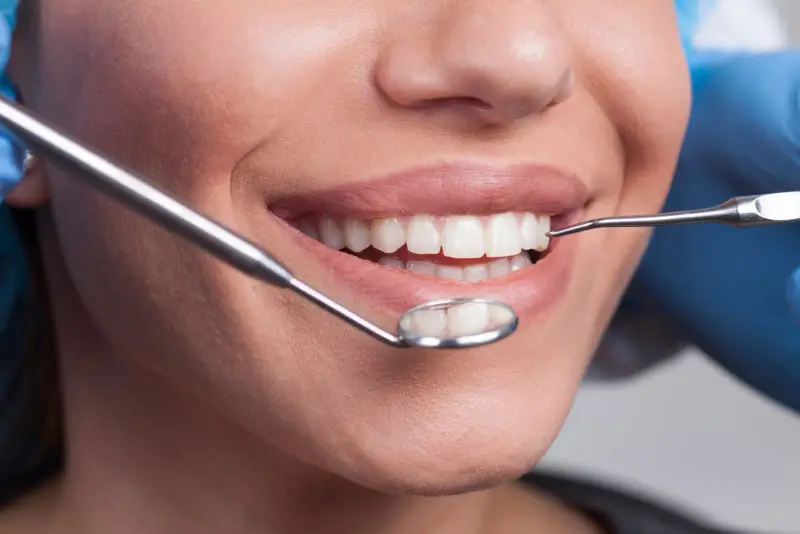
A whitening visit begins with an exam, not a tray. Your dentist checks for cavities, cracks, exposed roots and gum inflammation, takes X-rays only if something needs a closer look, and notes any crowns or fillings that would show. You talk through in-office treatment, custom trays or both, and leave with a written plan and pricing before anything is scheduled. The office at 4292 Lincoln Blvd in Marina del Rey is open six days a week, including Saturday from 8 AM to 4 PM, which suits patients whitening ahead of a weekend event. You can book online or start with our new patient information.
This article is general information from Marina Dentistry and not a diagnosis. Only an exam can tell you what is right for your mouth. Request an appointment or call (310) 578-5000.