
Can gum disease be reversed? What the three-month recheck shows
Gingivitis can be reversed with a cleaning and better home care. Periodontitis cannot be undone, but a deep cleaning and maintenance usually stabilize it, and the three-month recheck shows whether it is working.
Prices in this guide are regional estimates for context, not quotes from Marina Dentistry. Your written plan from the office is the only price that applies to you.
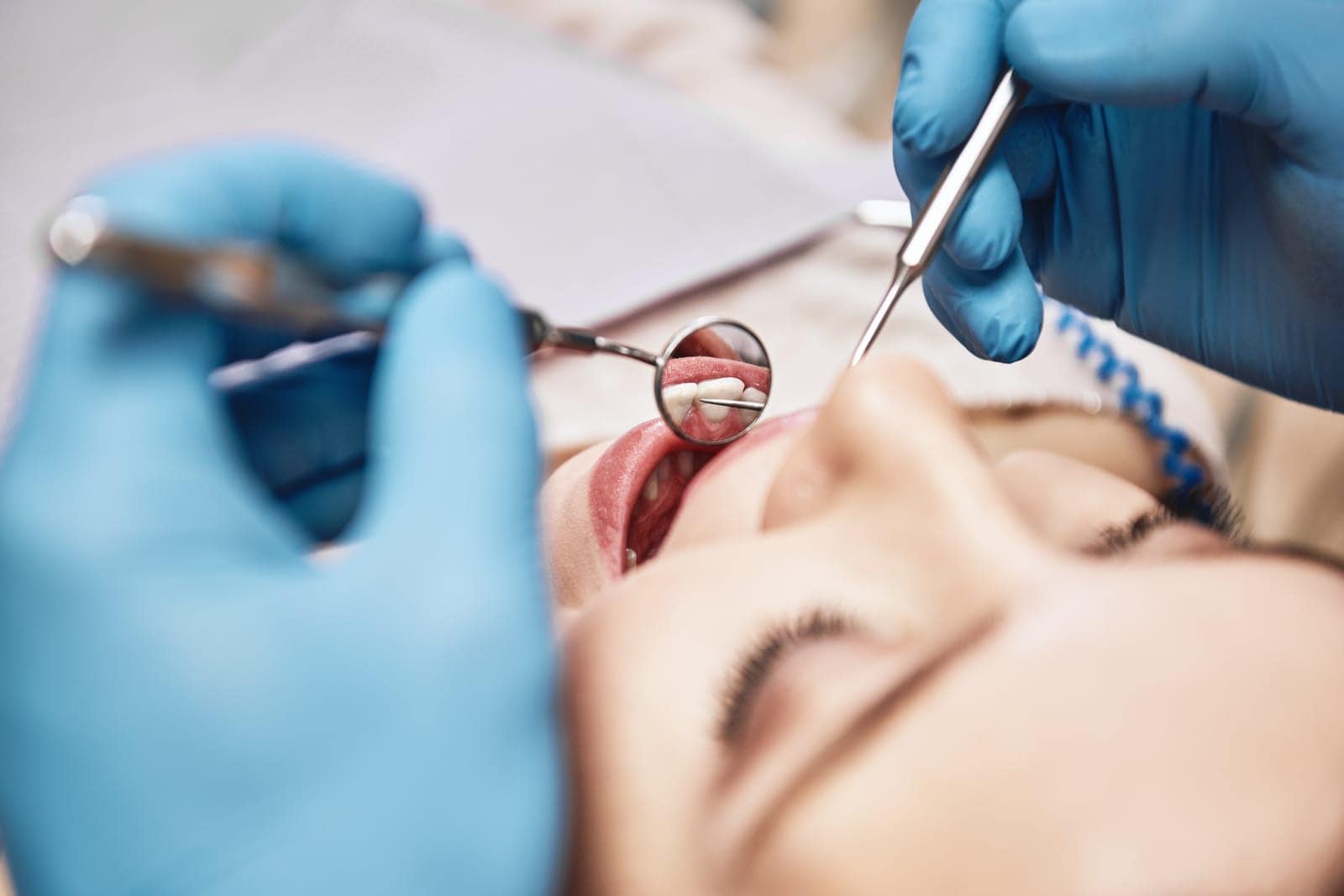
Gum disease can be reversed when it is caught at the gingivitis stage, where the gum is inflamed but the bone underneath is untouched. Once it has progressed to periodontitis and bone has been lost, it cannot be undone, but it can usually be stopped and held stable for years with a deep cleaning, maintenance visits and daily home care. The honest measure of success is not how your gums look in the mirror. It is the set of numbers your hygienist records at the recheck about three months after treatment.
This guide explains the two stages in plain words, what a deep cleaning is, what changes at the three-month recheck, which home care actually moves the numbers, and when a referral to a periodontist happens. The Centers for Disease Control and Prevention (CDC) estimates that nearly half of adults over 30 have some form of gum disease, and most of them do not know it, because it rarely hurts.
Gingivitis and periodontitis in plain words
A healthy gum hugs each tooth with a shallow groove around it, about 1 to 3 millimeters deep. Plaque that is not brushed away collects in that groove, irritates the gum and, within a couple of weeks, hardens into tartar that a toothbrush cannot remove.
Gingivitis is the body's response to that plaque. The gum turns red, puffs slightly and bleeds when you brush or floss, but the bone and the fibers that attach the tooth are intact. Remove the plaque and tartar, keep them off for a few weeks, and the gum typically returns to normal. That is what "reversed" means.
Periodontitis begins when the infection moves below the gum line and the body's own defenses start to dissolve the bone and fibers that hold the tooth. The groove becomes a pocket, often 4 millimeters or deeper, that traps more bacteria. Bone that has been lost does not grow back on its own. Treatment cannot return the pocket to a healthy 2 millimeters, but it can shrink it, stop the bleeding and halt the bone loss. That is what "stabilized" means, and for most patients it is a good result. The two stages can look alike from the outside, which is why your dentist or hygienist measures around every tooth rather than judging by eye.
What reverses and what only stabilizes
- Red, bleeding gums with no bone loss: reversible. A thorough professional teeth cleaning plus consistent brushing and flossing typically clears it within a few weeks.
- Pockets of 4 to 6 millimeters with bleeding and early bone loss: not reversible, but usually controllable. A deep cleaning followed by maintenance visits every three to four months is the standard approach.
- Pockets of 7 millimeters or more, loose teeth, significant bone loss: controllable in many cases, often with help from a periodontist, a dentist with extra training in gum surgery.
- Receded gums: the recession itself does not reverse without a graft, but the disease behind it can be stopped so it does not get worse.
What a deep cleaning is
A deep cleaning, written as scaling and root planing on your treatment plan, is a non-surgical cleaning of the root surfaces below the gum line, where a regular cleaning does not reach.
Your hygienist or dentist numbs the area being treated, then uses hand instruments and an ultrasonic scaler to remove tartar and bacterial deposits from the root. That is the scaling. The root is then smoothed so the gum can heal tightly against it and bacteria have a harder time clinging. That is the planing.
The mouth is divided into four quadrants, and a deep cleaning is usually done one or two quadrants per visit, so you can eat comfortably on the other side afterward. Mild, localized disease may need one visit; widespread disease usually takes two to four. Most patients describe pressure and vibration rather than pain while numb, then tenderness for a day or two and some cold sensitivity for a few weeks as the gum tightens.
A deep cleaning is the reset, not the finish line. What happens in the twelve weeks after it decides whether the disease is stable.
What changes at the three-month recheck
The fuller picture comes at the first maintenance visit, about three months after treatment, when your hygienist re-measures everything. Three numbers matter.
Pocket depths. A thin probe is walked around each tooth at six points, and the depth is recorded in millimeters. Before treatment you might see a run of 5s and 6s on the chart. A good recheck shows many of those back at 3 or 4. Pockets rarely return to 2, because lost bone does not regrow, but a 6 that becomes a 4 is a pocket you can keep clean at home.
Bleeding points. Each time the probe is placed, your hygienist notes whether the gum bleeds. Bleeding means active inflammation, and the share of sites that bleed is the most sensitive sign of whether the disease is quiet. A chart with a third of sites bleeding before treatment and a handful after is a chart that is working.
Bone levels. These come from X-rays, taken less often, and the goal is no change from one film to the next.
What "stable" means. Your dentist is looking for pockets that have shrunk or at least not deepened, bleeding points that have dropped sharply, no new loose teeth and no new bone loss. Stable does not mean cured. Most patients who have had periodontitis stay on maintenance every three to four months, because the bacteria that caused it return to deeper pockets in roughly that time.
If a few pockets have not improved, your hygienist may re-treat those spots, place medication in them or, if they are deep and still bleeding, suggest a referral.
Home care that actually moves the numbers
Most of the improvement between visits happens at your bathroom sink, and some habits move the chart more than others.
- Clean between the teeth every day. Floss, or if your pockets are deeper or your teeth have spaces, the small interdental brushes your hygienist sizes for you. The pocket is where the disease lives, and a toothbrush does not reach it.
- Brush twice a day for two minutes, angled into the gum line. Technique matters more than the brush. Scrubbing hard does not clean deeper and can wear the gum away.
- Use a rinse only if your dentist recommends one. Over-the-counter rinses freshen breath but do little for pockets on their own.
- If you smoke, this is the change that matters most. Smoking reduces blood flow to the gum, masks bleeding so the disease hides, and slows healing.
- Keep blood sugar controlled if you have diabetes. Gum disease and diabetes tend to make each other worse, and treating one often helps the other.
If your gums still bleed when you floss three weeks after a cleaning, something is being missed; bring it up at your next visit.
When a referral to a periodontist happens
Marina Dentistry treats gingivitis and early to moderate periodontitis in the office. A referral to a periodontist is suggested when pockets of 7 millimeters or more remain after a deep cleaning, when teeth are loose from bone loss, when the gum has receded enough that a graft would protect the root, or when surgery to reduce pockets or rebuild bone is the right next step. Your dentist coordinates the rest of your care around that treatment. A referral means your case needs a tool this office does not use, not that something went wrong.
What treatment costs, and the published special
The cost of gum treatment depends on the stage and on how many quadrants need a deep cleaning, which only your exam can determine. Dental insurance usually covers gum treatment at least in part. Marina Dentistry accepts all PPO plans and several HMO plans, including Delta Dental and Anthem; confirm your plan with the office. Payment plans through Cherry, CareCredit and Sunbit are available to approved patients, and the membership plan, published at $199, $299 or $399 per year, is an option for patients without insurance. It is not dental insurance.
Marina Dentistry also publishes a new-patient deep cleaning offer on its specials page: scaling and root planing for $99 per quadrant, for patients diagnosed with gum disease. It is priced per quadrant, and your exam determines how many quadrants need treatment. The offer is for new patients and cannot be combined with insurance benefits or other offers. Call (310) 578-5000 to confirm the current terms before your visit.
What a visit at Marina Dentistry involves
At a full exam, your dentist or hygienist measures the pocket depth at six points around each tooth, records where the gum bleeds and reviews X-rays for bone levels. If the numbers show gingivitis, a regular cleaning and a home-care plan follow. If they show periodontitis, a deep cleaning is scheduled by quadrant and the three-month recheck goes on the calendar before you leave. The team led by Dr. Sameer Aljanedi, DDS, treats gum disease at 4292 Lincoln Blvd in Marina del Rey six days a week, including Saturday. Our gum disease treatment page explains the stages in more detail. You can book online or read what to expect as a new patient.
This article is general information from Marina Dentistry and not a diagnosis. Only an exam can tell you what is right for your mouth. Request an appointment or call (310) 578-5000.