One of the first questions adults ask when considering Invisalign is simple — and completely reasonable:
“How long does Invisalign take?”
The answer isn’t one-size-fits-all, but modern Invisalign treatment is more predictable, efficient, and flexible than many people expect — especially for adults with busy schedules.
This guide explains:
- Average Invisalign treatment timelines
- What happens month by month
- Factors that speed up or slow down treatment
- What progress actually looks like along the way
- What Marina del Rey patients should realistically expect
The Short Answer: How Long Does Invisalign Usually Take?
For most adults, Invisalign treatment takes 6 to 18 months.
- Mild alignment issues: 6–9 months
- Moderate cases: 9–15 months
- Complex cases: 15–18+ months
Your exact timeline depends on tooth movement, bite alignment, and consistency with aligner wear.
You can learn more about treatment options through Invisalign at Marina Dentistry or by consulting with an Orthodontist experienced in adult care.
Why Invisalign Timelines Vary
Invisalign treatment length depends on several factors, including:
- Degree of crowding or spacing
- Bite issues (overbite, underbite, crossbite)
- Tooth rotation
- Jaw alignment
- Previous orthodontic work
- Daily wear compliance (this matters a lot)
The good news?
Adults often move through Invisalign more predictably than teens because they’re more consistent with wear.
Invisalign Is a Phased Process — Not Guesswork
Unlike traditional braces, Invisalign uses:
- 3D digital scans
- AI-assisted treatment planning
- Staged tooth movement
- Predictable aligner sequencing
This allows dentists to map out your treatment before you ever start, including:
- Number of aligners
- Expected duration
- Final tooth position
Month-by-Month: What to Expect With Invisalign
Month 0: Consultation & Planning
Before aligners begin, the foundation is set.
At your consultation:
- Digital scans or impressions are taken
- Bite and alignment are evaluated
- A customized treatment plan is created
- Timeline and expectations are reviewed
You’ll often see a digital preview of your future smile — which helps patients stay motivated.
Month 1: Getting Started
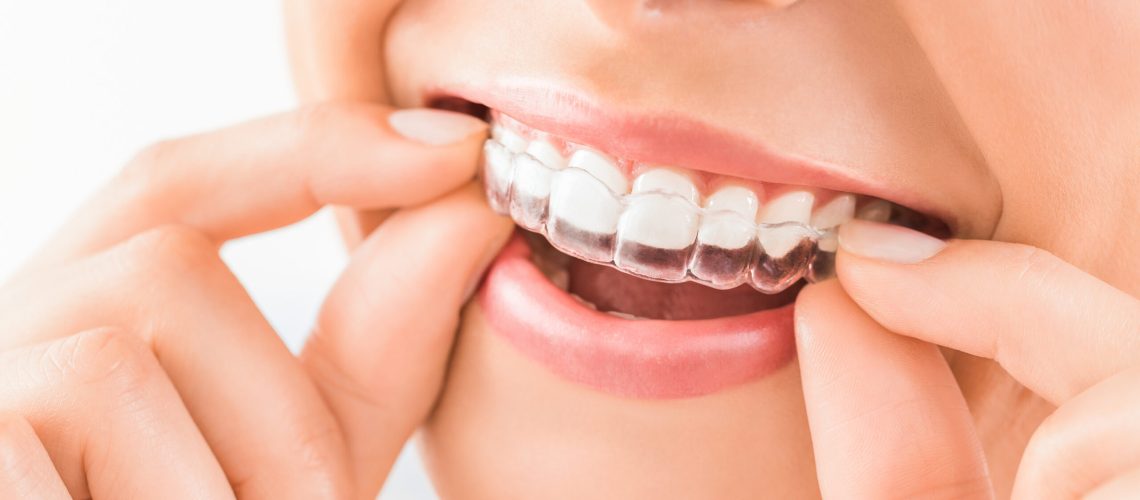
Once your aligners arrive:
- You’ll receive your first sets
- Instructions for wear and care are reviewed
- Attachments (small tooth-colored bumps) may be placed
- You’ll begin wearing aligners 20–22 hours per day
What patients notice:
- Mild pressure (normal and expected)
- Slight speech adjustment (usually temporary)
- Early awareness of aligners
This stage is about habit-building.
Month 2: Early Movement Begins
By month two:
- Teeth begin responding to consistent pressure
- Initial crowding or spacing changes become noticeable
- Swapping aligners feels routine
Common experiences:
- Pressure lasts only a day or two per aligner
- Speech returns fully to normal
- Aligners feel easier to manage
This is when patients often realize Invisalign is far less disruptive than expected.
Month 3: Visible Progress
Around month three:
- Subtle alignment improvements are visible
- Teeth may appear straighter in photos
- Confidence starts to increase
Patients often report:
- Increased motivation
- Easier cleaning
- Less self-consciousness when smiling
For mild cases, this may already be halfway through treatment.
Month 4–5: Mid-Treatment Adjustments
As Invisalign progresses:
- Bite adjustments become more noticeable
- Rotated teeth continue correcting
- Attachments guide precision movement
Your dentist may:
- Check tracking
- Adjust wear schedules
- Refine attachments if needed
This phase ensures accuracy and long-term stability.
Month 6: Major Milestone
For many patients, month six marks:
- Significant alignment improvement
- Straighter smile appearance
- Better bite balance
Some mild cases may be nearing completion, while moderate cases are well into refinement.
Patients often say:
“This is when it really feels worth it.”
Month 7–9: Refinement Phase (If Needed)
Many Invisalign cases include refinement aligners.
Refinements:
- Fine-tune spacing and bite
- Improve symmetry
- Ensure optimal final results
This stage is common — and expected — not a setback.
It’s what separates good results from excellent ones.
Month 10–15: Complex Case Completion
For more complex cases:
- Bite correction continues
- Jaw relationships stabilize
- Tooth positions are perfected
Progress may feel slower here — but it’s doing important work beneath the surface.
Final Month: Completion & Retainers
Once alignment goals are reached:
- Final scans are taken
- Attachments are removed
- Retainers are created to maintain results
Retention is critical.
Teeth naturally want to shift — retainers protect your investment.
What Can Make Invisalign Take Longer?
The #1 factor that extends treatment time is inconsistent wear.
Invisalign only works when aligners are worn:
- 20–22 hours per day
- Consistently
- As instructed
Other factors include:
- Skipping aligners
- Not wearing aligners during travel
- Delaying refinement appointments
- Poor oral hygiene affecting gum health
Consistency = faster results.
Can Invisalign Be Faster Than Braces?
In many adult cases — yes.
Invisalign often:
- Moves teeth more efficiently
- Requires fewer emergency visits
- Avoids bracket-related delays
- Allows better hygiene (less interruption)
Mild-to-moderate cases frequently finish sooner than expected.
Invisalign for Busy Adults
One of Invisalign’s biggest advantages is flexibility.
Patients appreciate:
- Fewer office visits
- Minimal lifestyle disruption
- Removable aligners for events
- Discreet appearance during treatment
For professionals, Invisalign often fits seamlessly into work and social life.
Does Age Affect Invisalign Treatment Time?
Age itself is not a limiting factor.
However:
- Bone density
- Gum health
- Previous dental work
Can influence movement speed.
Healthy adults of all ages can achieve excellent Invisalign results.
How Will Invisalign Feel Day-to-Day?
Most patients report:
- Pressure, not pain
- Temporary tightness when switching aligners
- Minimal disruption after the first few weeks
Discomfort typically lasts 24–48 hours per new aligner — then fades.
Frequently Asked Questions About Invisalign Timelines
Can Invisalign take less than 6 months?
Yes — for very mild cases.
Can Invisalign take more than 18 months?
Yes — for complex bite or spacing issues.
What if I don’t wear aligners enough?
Treatment slows or stalls.
Do refinements mean Invisalign failed?
No — refinements are normal and expected.
Will results be permanent?
With proper retainer use, yes.
Invisalign Is a Process — Not a Sprint
Invisalign isn’t about rushing — it’s about predictable, controlled improvement.
Month by month, aligners:
- Move teeth safely
- Improve bite balance
- Build confidence gradually
- Deliver long-term results
For Marina del Rey and Westside LA patients, Invisalign offers a modern, discreet path to a healthier smile — without putting life on hold.
Ready to See Your Invisalign Timeline?
At Marina Dentistry, Invisalign treatment is planned with:
- Precision
- Transparency
- Realistic timelines
- Adult-focused care
You’ll know what to expect — before you start.
👉 Schedule an Invisalign consultation:
https://www.marinadentistry.com/contact-us/